




Japan has provided Fiji with a 400 million Japanese yen assistance package to strengthen the Republic of Fiji Military Forces' (RFMF) disaster response capacity, deepening security cooperation between the two countries as climate-related emergencies place growing pressure on Pacific nations.
The support, delivered under Japan's Official Security Assistance (OSA) framework, will equip the RFMF with ambulances, field medical tents and automated external defibrillators.
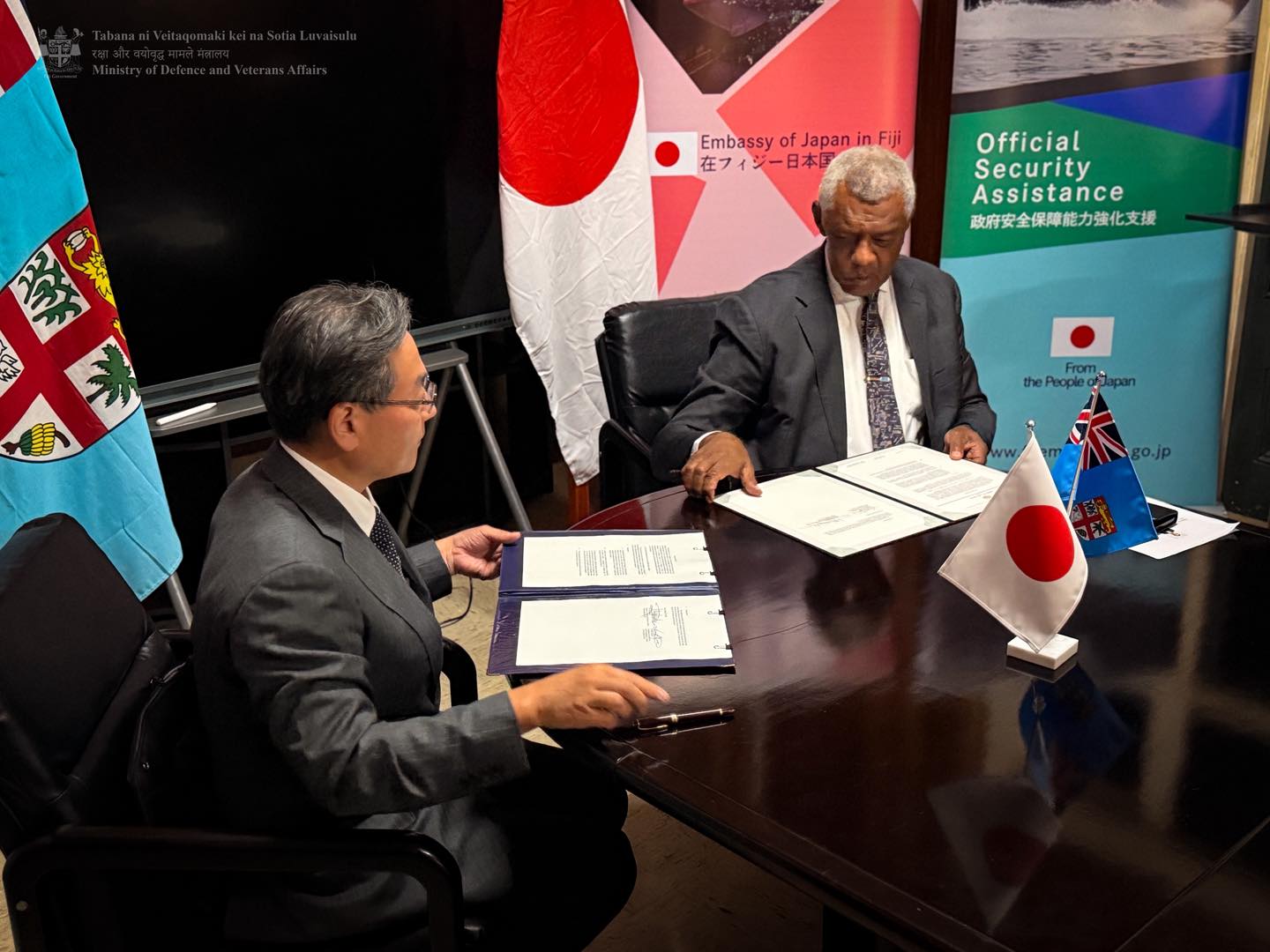
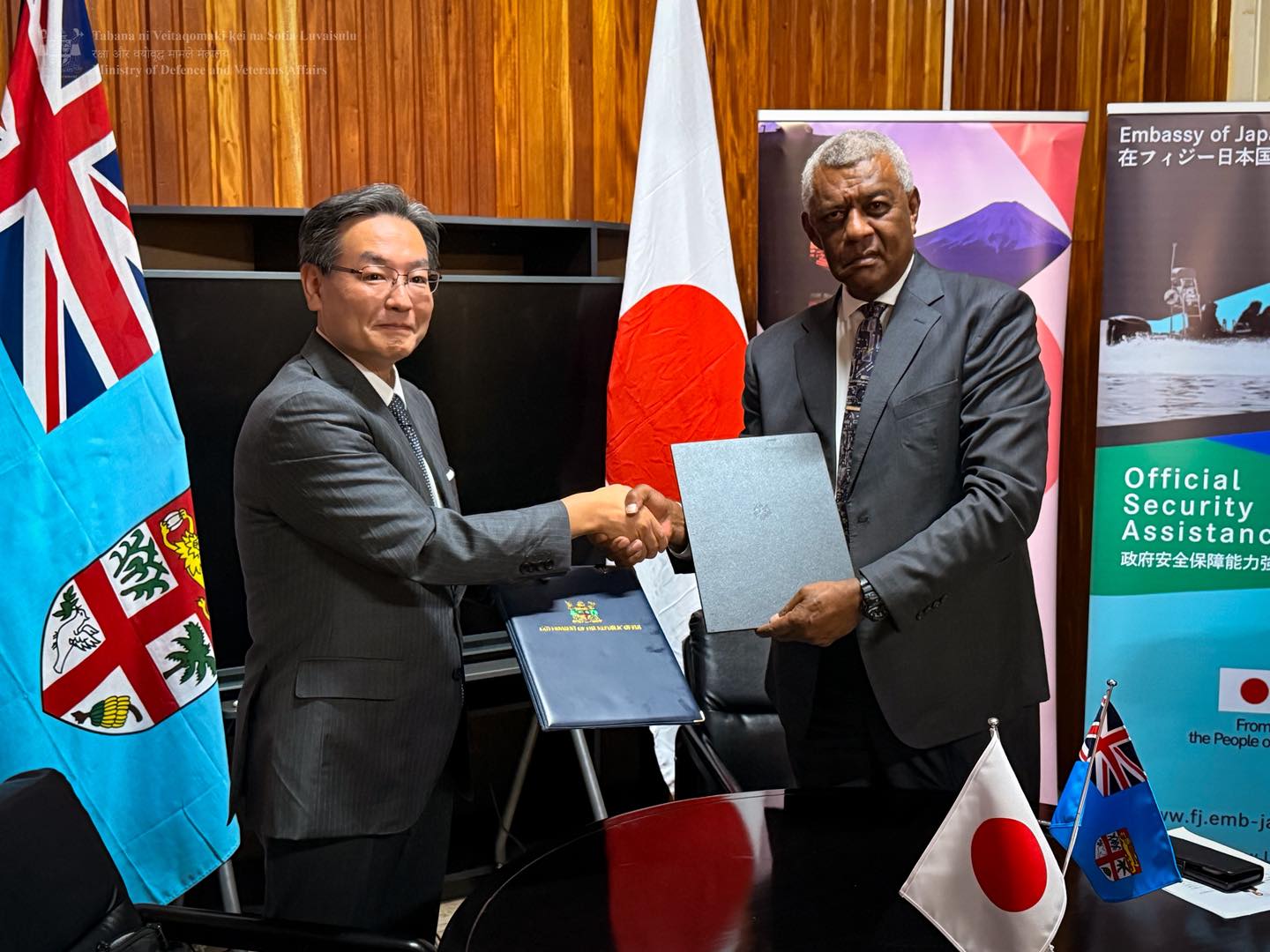
The agreement was signed in Suva by Fiji's Minister for Defence and Veterans Affairs Pio Tikoduadua and Japan's Ambassador to Fiji Hiroshi Tajima.
Mr Tikoduadua said the support was critical for a country vulnerable to climate-related disasters.
"Disaster preparedness is not optional," he said. "It is a state requirement."
The package is valued at $5.5 million FJD.
It is aimed at strengthening Fiji's medical capability in emergencies, including disaster response and humanitarian relief.
The assistance is also expected to support Fiji's role in regional humanitarian operations and international peacekeeping.
The signing continues a 56-year relationship between Fiji and Japan under the Lomavata Kizuna Partnership.
It also marks another step in a security relationship that has expanded through Japan's OSA framework.
Fiji is among the first Pacific nations to benefit from the OSA program, which Japan established in 2023.
The latest agreement builds on an earlier 400 million yen package provided in 2023.
That earlier support was used to strengthen the RFMF Naval Division's maritime surveillance capability to monitor Fiji's exclusive economic zone.
The new package shifts the focus from maritime surveillance to medical response and disaster readiness, and includes four ambulances, two sets of medical field tents and four automated external defibrillators. Those resources are expected to improve frontline medical response during cyclones, floods and other emergencies.
Mr Tajima said the package was intended to meet both routine medical needs and emergency situations.
"This assistance is intended not only to meet routine medical needs, but also to play a vital role in emergency situations, including disaster response and the urgent transport of patients," he said.
The latest agreement was formalised through an Exchange of Notes ceremony at the RFMF Strategic Headquarters in Suva.
For Fiji, the assistance comes as climate-related disasters continue to place pressure on emergency systems and frontline response services.
The Fijian government said rapid medical response and humanitarian relief were critical requirements for a small island developing state facing increasing climate-related events.
"During a national emergency, these resources will be deployed to provide rapid medical response and humanitarian relief," Mr Tikoduadua said.
Japan said the project was expected to strengthen Fiji's medical capabilities in emergencies and contribute to peace and security in Fiji and across the region.
Under Japan's OSA model, grant assistance is provided to armed forces and related organisations in partner countries through equipment, supplies and infrastructure support.
Japan has described the program as a way to strengthen the security and deterrence capabilities of like-minded countries while contributing to regional and international peace and stability.
In Fiji's case, the new agreement also reflects a broader defence relationship that now extends into emergency medicine and humanitarian response.
Japan said the project would work alongside earlier defence cooperation and exchanges between the Japan Ground Self-Defense Force and the RFMF, particularly in building military medicine capability.
The two countries also tied the agreement to the November 2025 Japan-Fiji Summit Meeting.
In the Joint Communique under the Lomavata Kizuna Partnership, both sides said they would continue working closely, including through OSA, to strengthen security cooperation.
The latest package is now being presented as a direct expression of that commitment.
With the new equipment set to go to the RFMF, the latest agreement places medical readiness and humanitarian relief at the centre of the next phase of security cooperation between Fiji and Japan.