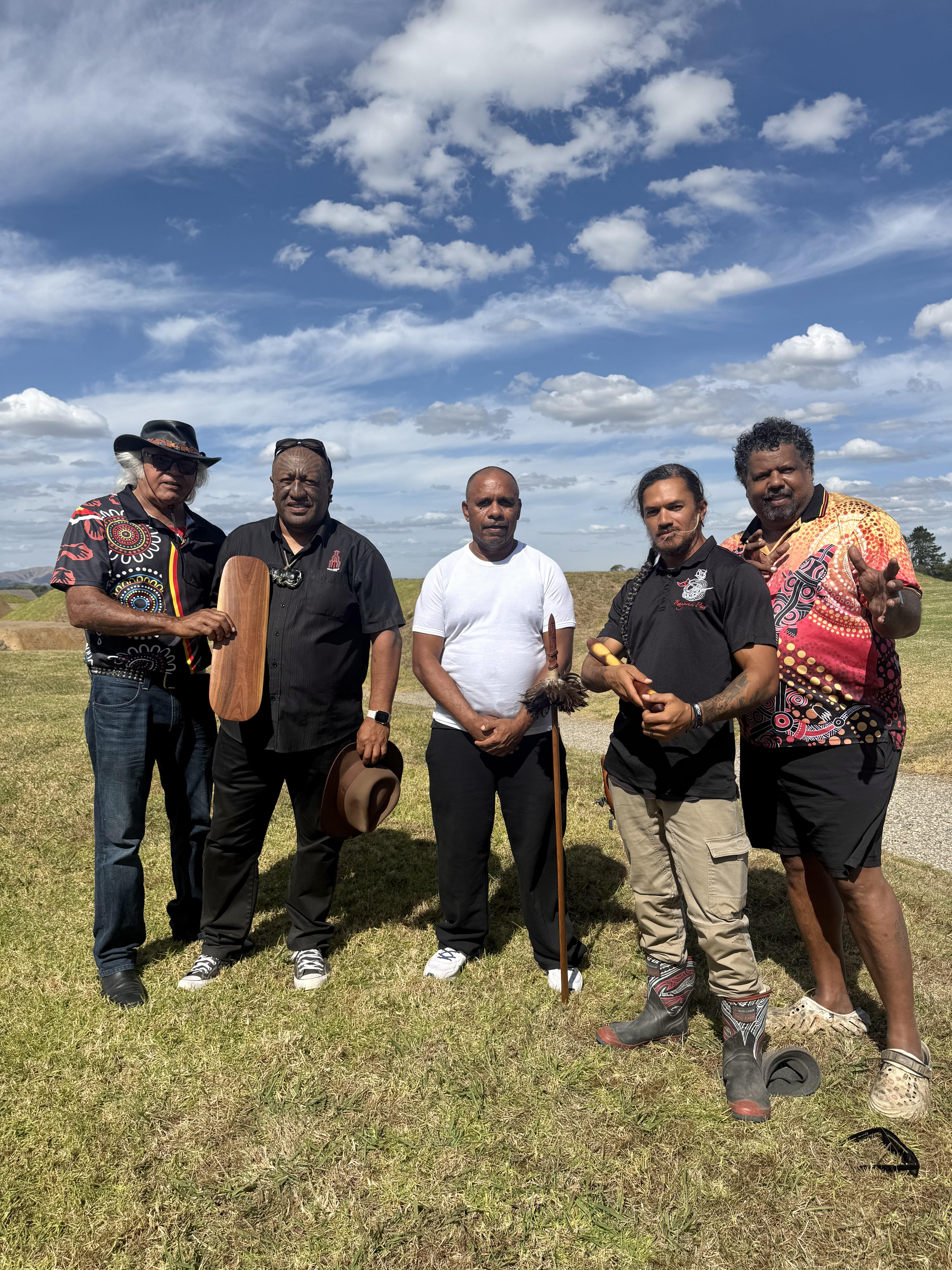





A delegation from the Whadjuk Aboriginal Corporation has visited the historic Rangiriri Pā site in Aotearoa, where Waikato iwi forces mounted a determined defence of their land against a British military invasion in 1863.
The visit formed part of a broader study tour examining Iwi governance, economic development and cultural leadership. At Rangiriri, the focus turned to the reality of invasion, Indigenous resistance and the ongoing work of reclaiming historical truth.
The Crown Invasion of Rangiriri was a major engagement in the Waikato, as British forces advanced into sovereign Waikato territory. More than 1,500 troops, supported by artillery and gunboats, attacked a defensive position held by around 480 Kīngitanga fighters.
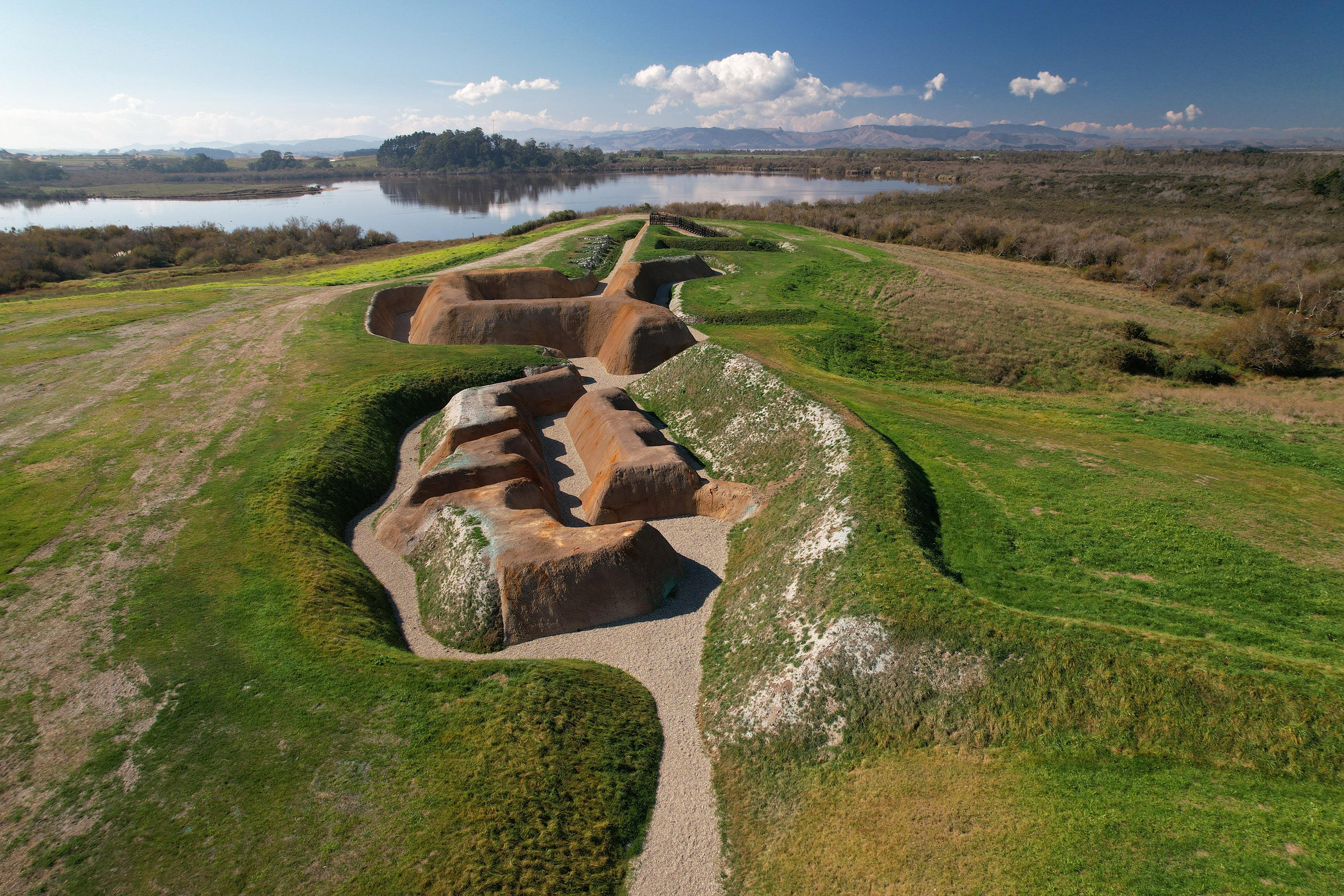
The Waikato defenders had constructed a highly sophisticated system of trenches, double ditches, parapets and rifle pits, demonstrating strategic planning and engineering capability aimed at repelling the invading force. Despite strong resistance against the odds, the position was eventually overrun.
The battle resulted in heavy casualties and the incarceration of more than 180 Waikato warriors. The British victory opened the Waikato region to further military occupation and the large-scale confiscation (raupatu) of Waikato lands.
For the Whadjuk delegation, the events at Rangiriri reflected a broader pattern of British expansion across Indigenous lands. Members noted that both Waikato and Noongar people faced the same colonial force, with similar consequences including violence, dispossession and long-term structural exclusion.
The site has since been restored through a hapū-led project led by Ngāti Naho leader Brad Totorewa, who is descended from the original engineer of the trench system, tribal warrior, Te Ahorangi Te Wharepū. The reconstructed trenches are part of a wider effort to return the land to iwi control and to ensure that the history of the site is told by descendants.
Totorewa worked with whānau (family), iwi (tribal) and government partners to bring the land back into hapū ownership following decades of fragmentation. He then worked with Waikato-Tainui CEO Donna Flavell to secure funding and technical support for the reconstruction of the trenches, delivering a multi-million dollar project that combined historical evidence, cultural knowledge and engineering to rebuild the defensive system at scale.
Before walking the site, Totorewa presented an artwork depicting two faces within a single figure, representing Indigenous identity and the presence of the coloniser. He spoke about an ancestral warning describing the arrival of a stranger who would come to control land and power, and urged the group to consider the perspective from which decisions are made on behalf of their communities.
He also explained that many women and children were killed while attempting to escape the battle towards Lake Kopuera under fire by the british. The lake was described as a burial ground, underscoring the human cost of the invasion and the ongoing cultural significance of the site.
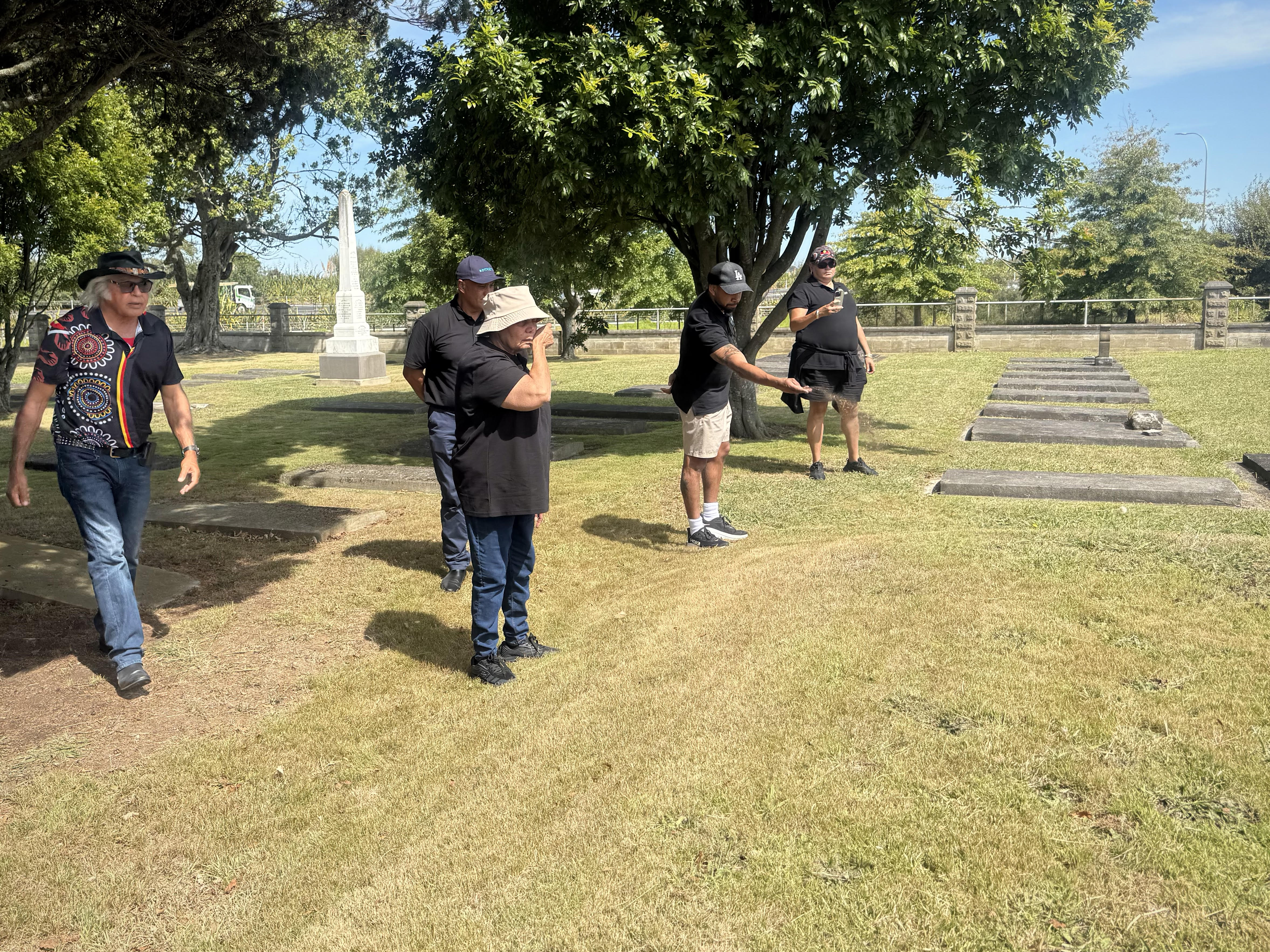
A visit to the cemetery further illustrated the imbalance in how the conflict has been recorded.
British soldiers killed in the battle are buried in individual marked graves. Waikato warriors who died defending their land were buried together in an unmarked burial mound, without individual recognition. The difference remains visible. It reflects both the conditions of the conflict and the unequal systems that shaped how history was documented.
Whadjuk Aboriginal Corporation Chair Charne Hayden said the visit reinforced the parallels between Waikato resistance and Noongar experience.
"We've had over half a dozen massacre sites within our region itself," she said. "Massacre sites are part of where we come from."
She referred to the long campaign to have the violence at Pinjarra formally recognised as a massacre.
"For the past 150 years it was called a battle. But it wasn't a battle," she said.
Hayden said the impacts of these events continue to be carried by descendants.
"We suffered the same consequences that you did," she said. "We carry that loss."
Karen Morich, a member of the cultural advisory committee, said the visit highlighted both shared experience and important differences.
"Pinjarra is a significant place for us," she said. "We fought for many years to get it changed to massacre. You can't call it a battle because it was one side only."
"It's interesting to hear your story today and how you at least had a chance to be ready and defend yourselves."
Cultural leader Honey Webb said the visit reinforced the importance of historical accuracy and collective memory.
"We remember that we lost a lot and remember the ones that were our survivors too that bring us strength," she said.
"Knowledge is power and history is who we are."
Wayne Ryder, Deputy Chair of the Whadjuk Aboriginal Corporation, said the visit provided practical insight into how Indigenous communities can build strength from their history.
"We've got similar past, similar stories, but it's nice to be here to see what happened here and which way you mob went in terms of empowering your community and how we can do that at home as well."
The Rangiriri project demonstrates how Indigenous communities can reclaim sites of conflict and use them to strengthen identity, governance and long-term development. By restoring the trenches and embedding the site within an education and cultural framework, Waikato iwi have asserted control over both land and narrative.
For the Whadjuk delegation, the visit provided a clear example of what it means to defend, remember and rebuild on Indigenous terms.