





Leaders for several Pacific island nations and territories say they are working to ensure their voices will not to be marginalised again following the outcomes of the climate change conference in Belem, Brazil.
That's the verdict days after returning from the 2025 United Nations Climate Change Conference (COP30) where they say they were largely unheard and unrecognised by the world's most powerful countries.
The Pacific region has started to pivot from negotiation to delivery after COP30, aware of their vulnerability on the front line of rising seas and intensifying storms.
Pacific leaders and organisations have long argued that smaller ocean nations remain excluded from key climate finance and the decision-making channels, despite facing the greatest risks.
An analysis by the Green Overseas program found that without deliberate and decisive action, progress made at COP30 will fall short of producing change for nations most exposed to the ongoing climate crisis.
Ahab Downer, the Green Overseas director, stressed the need for systemic change.
"COP30 has shown that many climate-conscious leaders remain keen to pursue the ambitious objectives, but ambition must be paired with access,'' he said in a statement.
"For COP31, ensuring that Pacific islanders - in addition to other island populations across the globe - are given an opportunity to shape and to drive the agenda is essential and will surely generate benefits for all populations of our planet.
"These peoples have extensive lived experience and uniquely appropriate expertise, without which resilience-related implementation efforts will remain incomplete."
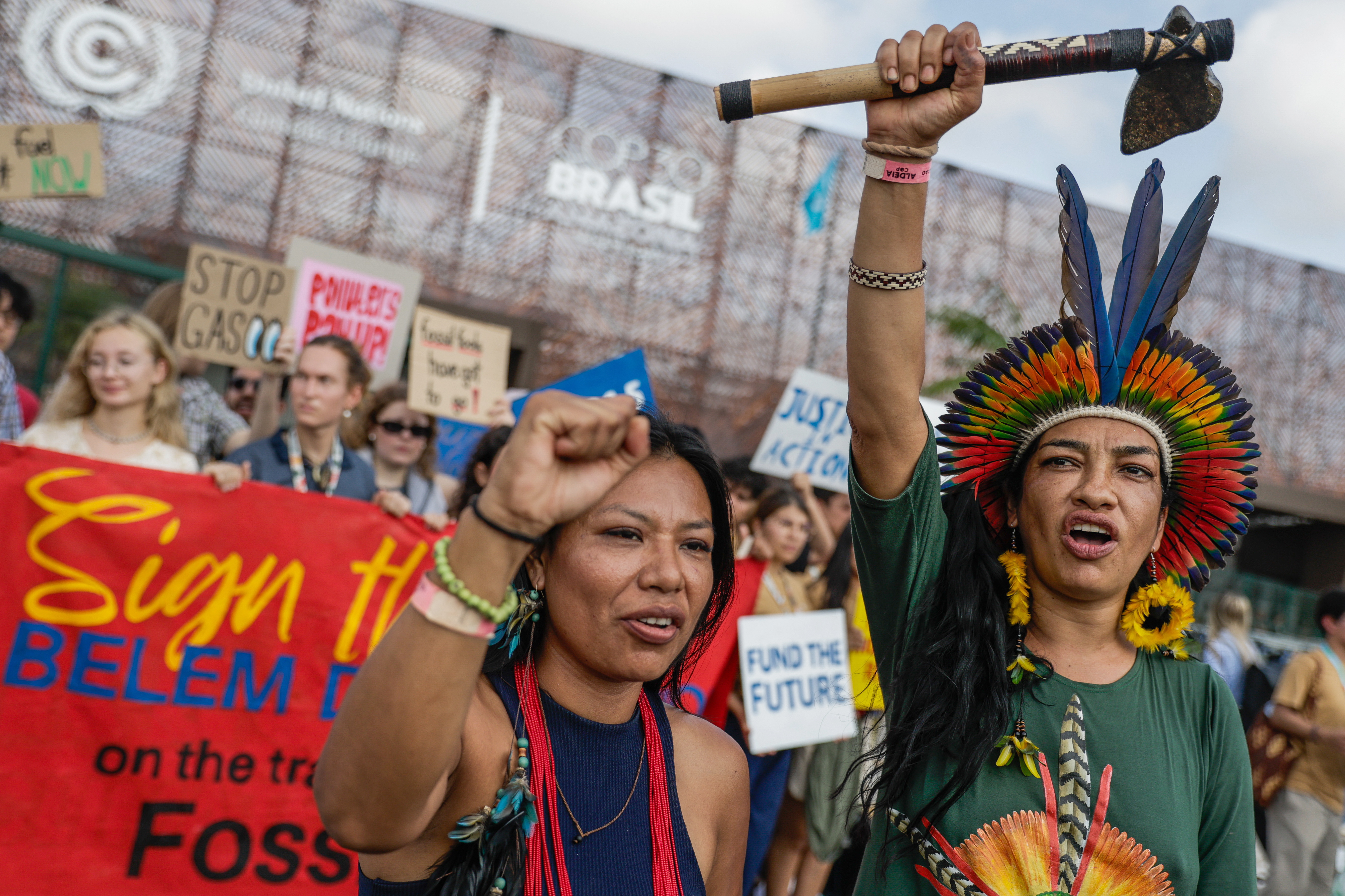
Ilona Mayerau-Lonné, a representative for Kanaky New Caledonia across the European Union's Overseas Countries and Territories Youth Network, was equally outspoken.
"While COP31's move to Türkiye may reshape the conversation, it must not come at the cost of silencing the Pacific," Ms Mayerau-Lonné said.
"Our leadership isn't optional; it's the foundation of credible climate action. From loss and damage to ocean resilience, the Pacific's solutions are the world's lifeline.
"Excluding us isn't just unfair, it's a strategic blunder we'll all pay for."
Ms Mayerau-Lonné said Pacific islanders have expertise in adaptation, Indigenous knowledge, and climate litigation was the blueprint for global survival.
"This isn't just about representation, it's about recognising that no climate solution is complete without the voices of those living the crisis at the forefront," she said.
"If islands' voices are drowned out by distance or bureaucracy, COP31 fails before it will even begin."
Smaller island governments continued to push for practical, accessible mechanisms that allow their administrations to engage meaningfully in the Paris Agreement's next phase.
Shiva Gounden, the head of Greenpeace Australia-Pacific, said the multilateral process is being attacked, which is making it hard to reach a meaningful consensus on important decisions.
The Pacific campaigner said the conference in the city of Belém on the doorstep of the Amazon finished with an "extremely weak" outcome.
"The credibility of COPs (Conference of Parties) is dropping somewhat, but it can be salvaged if there's a little bit of political will that is visionary from across the world," Mr Gounden said.
"The Pacific has showed leadership in this quite a bit in the last few COPs.
"There's parties within the system, who are attacking the science... The facts that show we need to really be lot more ambitious than we are.
"If that continues there will be a lot more faith that's lost by a lot of people across the world, and that can only be salvaged by political will and the unity of people across the world."