




This year's COP 30 in Belem, Brazil, attracted a strong Aboriginal and Torres Strait Islander presence, perhaps the largest yet in COP history, as the impacts of climate change on people across the continent, and including the Torres Strait Islands, have been devastating.
From rising waters to floods and fires, temperatures, and heat at dangerous even toxic levels. Too many of our rivers are drying up and incredible biodiversity at risk from climate change.
Indigenous people throughout the wider Pacific are fighting climate change and calling for recognition and support that is critically needed to combat these devastating impacts. Still, we know that Indigenous peoples, dispossessed by colonisation, face a bleak future as governments, including in Australia, do not address fossil fuel emissions and allow the big polluters, the coal, oil and gas industry, to continue.
Australia bid unsuccessfully to host the next COP 31 in Australia - promoting its relationship with Indigenous peoples as part of its bid. Aboriginal and Torres Strait Islander delegates to COP 30 that I spoke with were supportive of Australia's bid to host COP 31 in Adelaide; seeing this as an opportunity to bring attention and build momentum in our country and region on the impacts of climate change and the critical role Indigenous peoples play in caring for country.
And of course, we want our government to uphold its global commitments and support a Just Transition towards renewables and critical minerals, as well as adaption and mitigation, that respects and includes Indigenous peoples and our inherent rights.
Here in Belem, we heard directly from the Indigenous peoples of the region, in particular the Yanomani of the Amazon fighting incursions including illegal mining and de-forestation on their traditional lands. The Indigenous protest at COP 30 gained international attention and led to increased security and military presence at COP 30 and also highlighted the urgency of the situation for the Indigenous peoples of the Amazon and elsewhere who are being killed as defenders of their lands. The Amazon also holds global significance acting as a critical 'carbon sink' that must be protected at all costs.
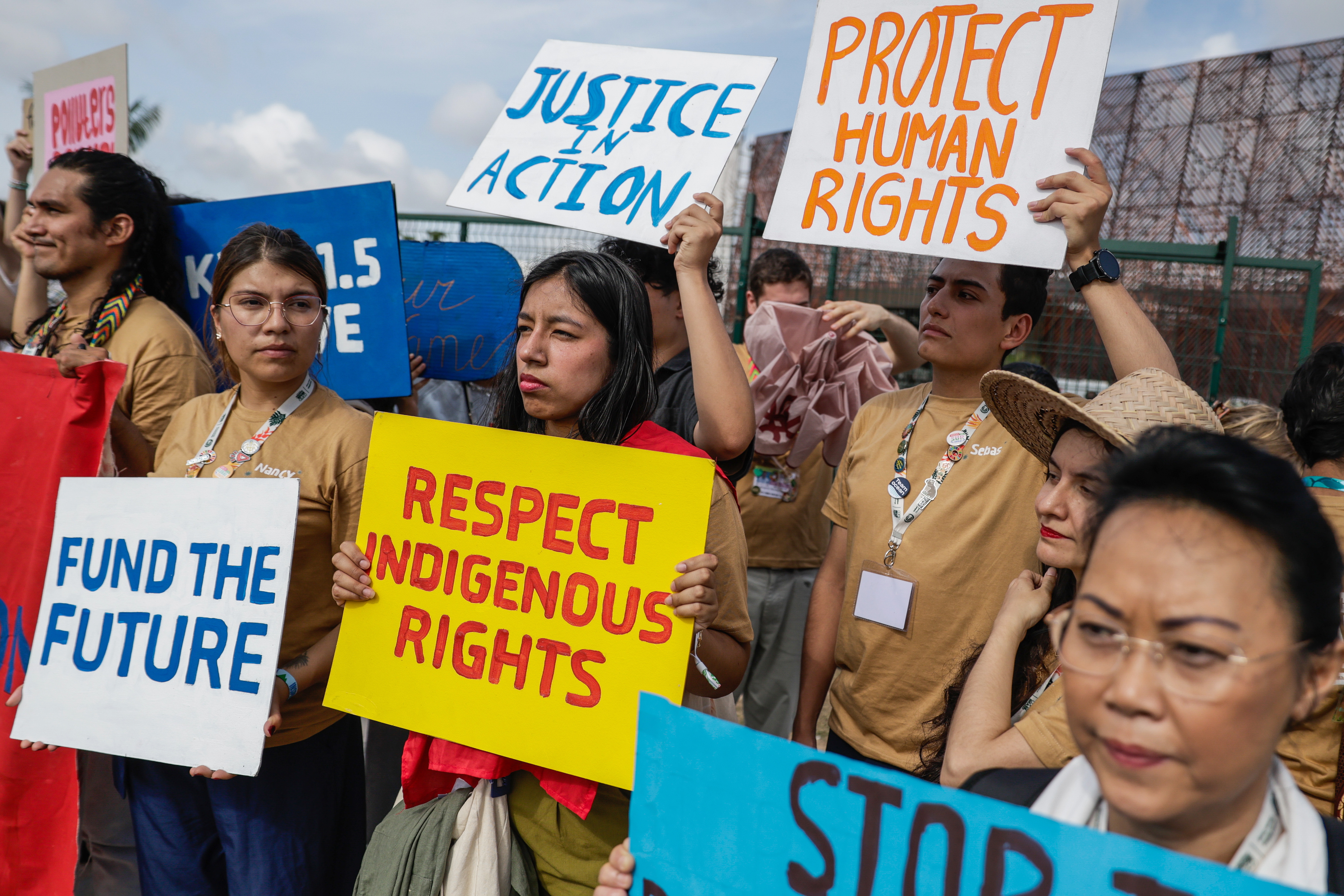
As Indigenous peoples in the Amazon protect their traditional lands, so do many in our country, caring for land and waters, day in day out. As well as phasing out fossil fuels, support for Traditional Owners caring for country is the most important commitment our government can make as we face this global challenge. Are we really doing enough?
The Indigenous Ranger Program funded by the Federal Government has been successful in key areas. It has helped meet closing the gap targets through Indigenous employment as well as protecting biodiversity and reducing carbon emissions. Some programs in Northern Australia have succeeded in generating income through carbon credit units through early dry season-controlled fire burning.
However, the funding has not been distributed evenly and many Aboriginal and Torres Strait Islander groups, particularly in southern Australia often don't get any financial support for ranger programs. The funding when delivered mainly targets areas of Australia where Aboriginal and Torres Strait Islander peoples hold exclusive possession native title and where there are no significant competing land uses, such as mining and high value agriculture.
The late Banjima Elder Maitland Parker was one of the first Aboriginal people in Western Australia to benefit from ranger programs run by what was then the Department of Conservation and Land Management (CALM). He was selected by his Elders and trained by CALM, and looked after his traditional country including the Karijini National Park. He lived in the park for more than 30 years tirelessly working to protect his country both as a CALM ranger and a Banjima Elder.
The movie Yurlu Country recently released, which Mr Parker co-produced, documents the end of his life, cut short by mesothelioma contracted as a child from playing near the Wittenoom asbestos mine.
Yurlu also brings to life the devastation of Bajima peoples country caused by the iron ore mines which drive the Australia economy as well as the Wittenoom mine, which although closed in the 1960s remains today the largest contaminated site in the southern hemisphere. Mining has generated significant wealth for this country, but Banjima people still cannot return to and care for their Country. Where is the commitment from State and Federal Governments to ensure that mining revenues are set aside for restoring country which has supported the Australian economy for the last half century?
And if COP 30 should teach us anything it is this, Indigenous peoples should not have to bang down the doors of the UN for their voices to be heard. Caring for lands in the face of climate change and unsustainable land use that risks our planet's very future, the future lies with Indigenous peoples. We have the answers to our shared future, and governments, including Australia must listen before it's too late.
Dr Hannah McGlade is a Kurin Minang human rights expert, law academic and member of the United Nations Permanent Forum on Indigenous Issues.