



When First Nations people come together across oceans, something sacred happens — a remembering, a reweaving, a resurgence.
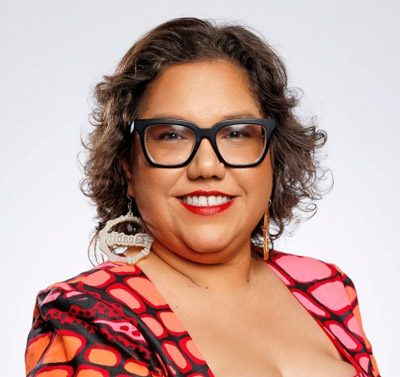
That energy was palpable at the 2025 Native American and Indigenous Studies Association (NAISA) Conference in Oklahoma City, where Badimaya and Ukrainian woman, entrepreneur, and healer Bianca Stawiarski stood among peers from as far as Siberia, North and South America, Turtle Island, Aotearoa, and the Pacific.
Founder of Warida Wholistic Wellness, Ms Stawiarski's presence at NAISA was more than symbolic — it was transformative. As a PhD candidate, business owner, and community advocate, she brought a voice grounded in lived experience, cultural strength, and the unwavering belief that healing begins within community.
"Interestingly, it was never my interest to undertake a PhD," she said. "But a few years ago, several people I was supporting suggested it might assist people with a dissociative identity disorder diagnosis to research the therapeutic approaches I utilise."
What started as a research idea quickly evolved into something much deeper.
"After a 6-month absence, I returned with a renewed focus — to develop localised research on Aboriginal and Torres Strait Islander women's healing through entrepreneurship," she said.
Ms Stawiarski's research isn't just academic — it's personal.
"I wanted to deeply explore whether a community-led circular research process could positively impact women's empowerment projects. At the heart of this research is our wisdom — Indigenous ways of knowing, being and doing — that see healing as holistic, relational, and grounded in Country," she said.
This ethos underpins everything she does. At NAISA, Ms Stawiarski shared space with other Indigenous scholars and change-makers.
"Personally, it felt like a homecoming," she said.
"Walking alongside other Indigenous scholars from across the globe whose stories, struggles and strengths mirror our own… It validated the power of cultural integrity."
Her participation also opened doors professionally.
"It expanded the possibilities for Warida and my PhD. It affirmed that our therapeutic leadership model, ngardi guwanda (grounded in deep listening) and ngalimi yunggudya (reciprocity), holds value far beyond Australia," she said.
Ms Stawiarski's work in therapeutic leadership challenges Western clinical norms.
"Healing doesn't only happen in clinical rooms involving power imbalances. It happens in the stories we tell, the spaces we create, strengthened families and communities, and the systems we change," she said.
She speaks of healing that is community-led, culturally safe, and linked to economic empowerment through heart-led social entrepreneurship.
The theme of collaboration and resistance was woven through every session.
"There was this powerful undercurrent of land-based healing, reciprocity, and refusing to be confined by colonial metrics of success," she said.
On a panel titled Economies in Indigenous Hands, she joined Māori and Samoan PhD candidates sharing Indigenous models of business, healing, and enterprise.
"It was powerful… all the presentations I attended utilised some form of storytelling as resistance. The underlying theme was strength-based healing in community — which deeply echoes Warida's ethos," she said.
NAISA isn't just a conference. For Ms Stawiarski, it was a movement.
"It creates the conditions for gudu-guduwa (coming together), to strategise, uplift, and decolonise in community. In these spaces, we reclaim the narrative of wellness on our terms: fully grounded in culture, language, song, and Country," she said.
As for what's next? Ms Stawiarski vision is expansive.
"We're deepening our international offerings — sharing trauma-informed frameworks, entrepreneurial mindsets, and grounded approaches to healing across borders," she said.
She plans to attend NAISA Chile in 2026, finish her thesis, and grow Warida's reach across Southeast Asia and the UK.
"This is a season of growth and connection," she said.
"We all hold our own answers, and it's time we shared them across oceans."