




Against all odds—war, discrimination, poverty, and even a serious accident—Sister Marta Yach Cosme's presence among the congregation's beloved gardens seems nothing short of miraculous.
Growing up as an Indigenous woman in Panajachel, Sister Marta never envisioned herself in this role.
"Yet God makes great things happen," she reflected on her leadership of the congregation of 49 Indigenous sisters, established nearly 50 years ago amid civil conflict.
The Missionary Sisters of the Eucharist not only survived the violence of the Lake Atitlán region but thrived during Guatemala's 36 years of conflict. Their missions now extend to various regions including San Pedro Ayampuc and Santiago Atitlán. Convincing Indigenous women like Sister Marta to embrace a life of consecration was challenging.
"My parents said nuns came from families of means and needed high academic degrees. So, what chance did I have?" Sister Marta told Global Sisters Report.
Confronting racism and financial barriers to education, many Indigenous women, including Sister Marta, initially believed such a path was unattainable.
Today, Indigenous women lead the Missionary Sisters of the Eucharist, one of three Indigenous congregations in Guatemala. Their founder, Sister Tonia Maria Orland, passed away in 2000. In the early 1970s, despite the violence and discrimination in Panajachel, she and others, including Blessed Stanley Rother, worked to help those in need.
Sister Tonia Maria faced death threats and went into hiding but remained undeterred. Dressing in a colourful traje, a traditional woven outfit, she established a daily routine centred on the Blessed Sacrament to strengthen the sisters for their mission. This spiritual fortitude supported them through dangerous areas, including regions of armed conflict and untamed wilderness.
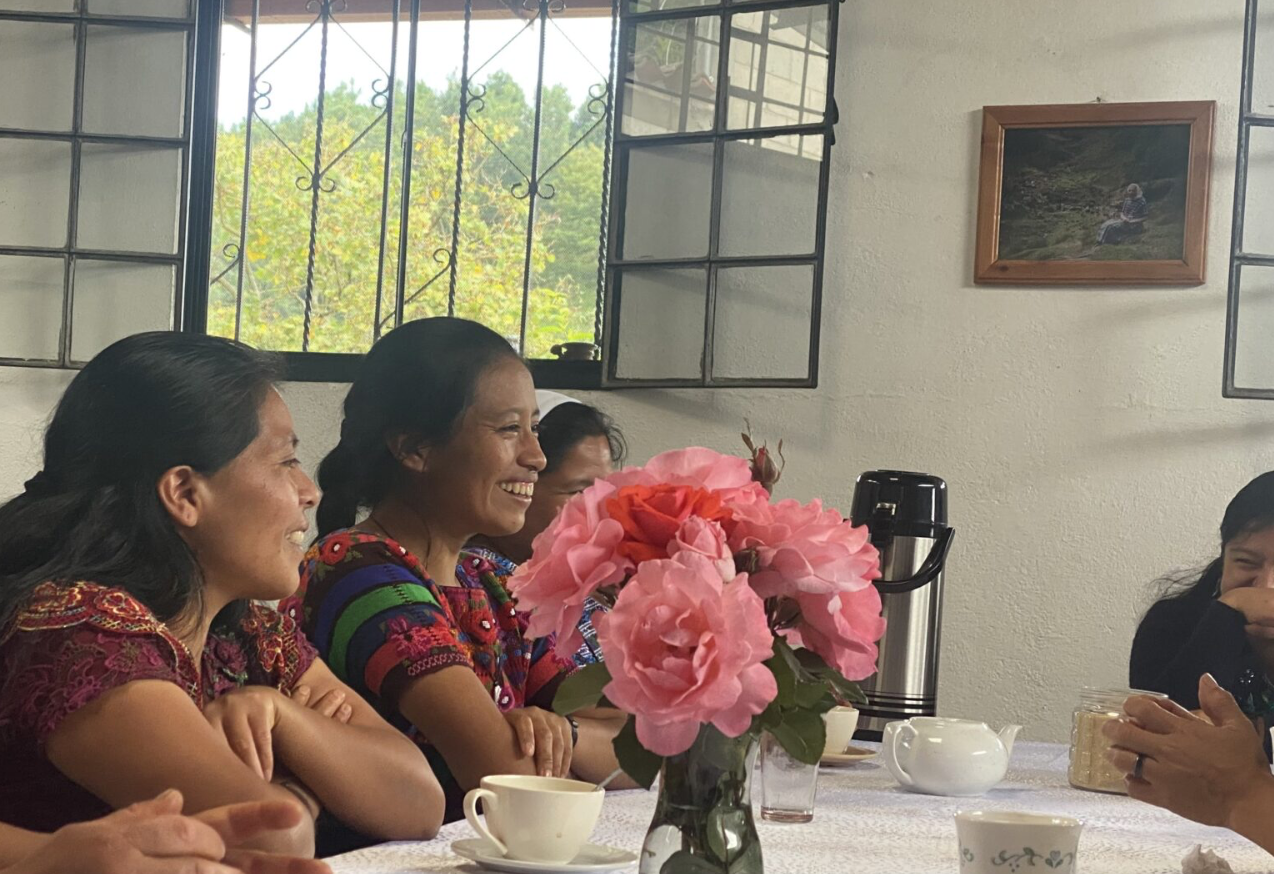
Sister Marta bears scars from an accident during one such journey when she was caught in a mudslide, breaking her arms while clinging to a tree. Despite the struggle, she was rescued by a group of people, she told the Global Sisters Report.
The Missionary Sisters of the Eucharist bring the Gospel to communities while respecting the diverse beliefs of Indigenous groups. Sister Tonia Maria's vision included not only promoting education but also ensuring the sisters connected with and served local communities.
"Madre Tonia gave us an integral formation as Indigenous people," Sister Marta said.
Sisters receive traditional religious education and formation but also immerse themselves in the beliefs, customs, languages, and practices of various Mayan communities. Their devotion to the Eucharist extends to caring for the elderly and youth with limited resources, as Sister Petronila explained.
They are well-versed in regional languages such as Kaqchikel, K'iche', and Tz'utujil, as well as each culture's customs and religious beliefs.
The motherhouse in San Andrés Semetabaj, near Panajachel, reflects a fusion of Indigenous Guatemalan culture and Christianity. Its chapel features a tabernacle inscribed with "AJAW," meaning "Lord," a decoration of St. Kateri Tekakwitha—the first American Indian saint of the Catholic Church—and a poster showcasing traditional Indigenous clothing from Guatemala.
In addition to their knowledge of medicinal plants, some sisters are also trained in massage therapy, a form of alternative medicine valued in the remote areas where they serve.
"Our work is to go to rural areas and help those who suffer," Sister Marta said.
"We need to know about medicinal plants because in distant areas, access to doctors is limited."
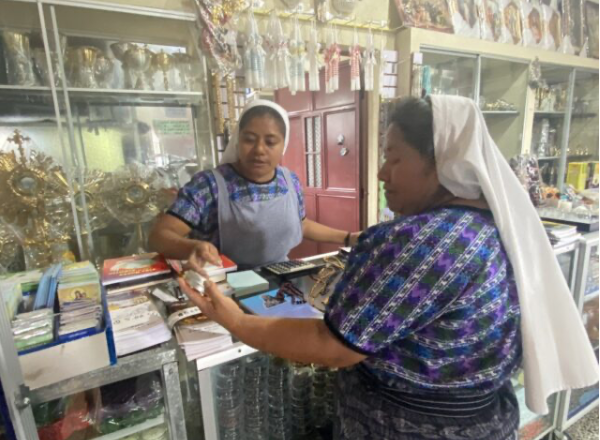
Indigenous communities appreciate that the sisters not only resemble them in appearance and speak their languages but also wear traditional attire.
"When we go to the villages, we speak in our languages to the Elders who don't speak much Spanish... and the people feel confident," said Sister Petronila.
"I believe that because of that, they also feel valued."
Originally, each sister wore her own huipil, an embroidered blouse signifying her community. When Sister Tonia Maria found that some blouses were more expensive than others, she decided that all sisters would wear a uniform traje. The sisters now don a distinctive blue, purple, and black habit with pinkish tones, which has become associated with their congregation.
Once a year, the sisters celebrate a cultural day, donning their traditional Indigenous traje to represent their ancestral communities. They also share traditional foods and customs from their upbringing.
"Most people look up to us," Sister Marta said.
"But there are also some who don't. Madre Tonia gave value to our culture."
Some sisters have earned degrees in psychology or theology, enabling them to work as teachers, nurses, secretaries, and social workers, supporting the poor communities around them. Their connection with Sister Tonia Maria has brought them the support of the Presentation sisters, whom they call "aunts."
With help from the Hilton Foundation (which also supports Global Sisters Report), these sisters provide psychological and educational services for local youth, significantly contributing to their development.
"Madre Tonia said that the Holy Spirit touched her heart, seeing the need in our country, but she never imagined founding a congregation like ours," Sister Marta said.