



As the sun set on the 2025 AIATSIS Summit on Larrakia Country, the final days of the gathering left a legacy far beyond the conference halls. From Mexico to Guatemala, Indigenous leaders travelled thousands of kilometres to join in one of the world's most important conversations on First Nations knowledge, cultural preservation, and global solidarity.
Supported by grant funding from the Council on Australia Latin America Relations and the Department of Foreign Affairs and Trade, the AIATSIS International Delegation 2025 brought together some of the most powerful voices in Indigenous advocacy and policy across the Latin American region.
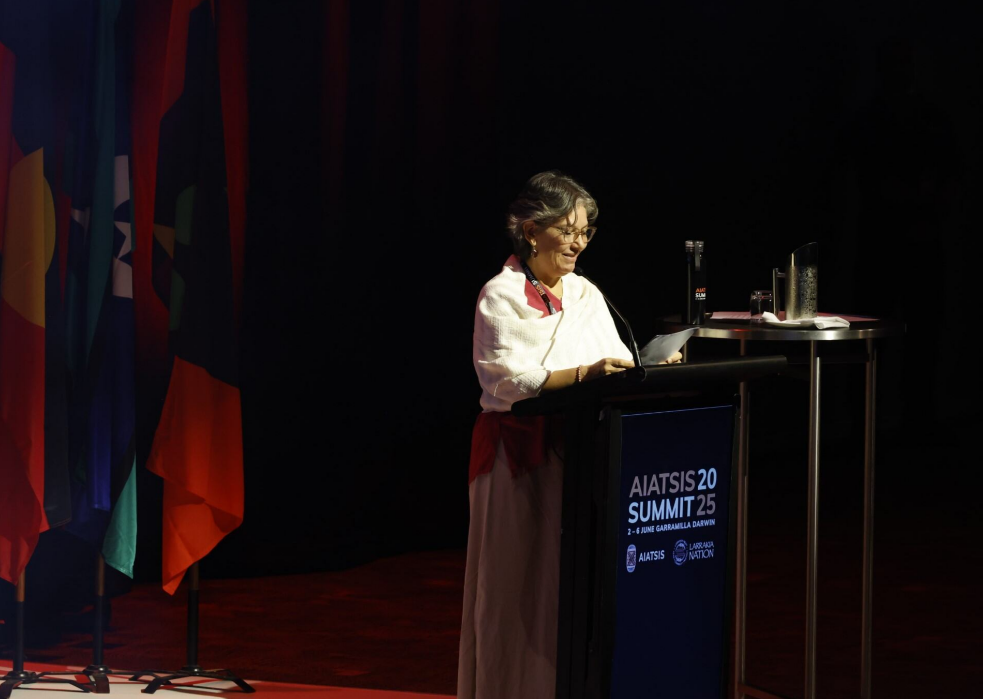
For Laura Jazmín Cotí Lux, Deputy Vice Minister of Cultural and Natural Heritage in Guatemala, the journey to Australia was both political and deeply personal.
"To be welcomed onto Larrakia land, to see the way you honour your connection to Country, to water—it was magical," she said. "In Guatemala, we are the daughters of the corn. Here, you are the children of the water. And both are sacred."
Ms Jazmín Cotí Lux's keynote at the Summit called for constitutional recognition of Indigenous rights—something she said Guatemala has achieved, despite ongoing challenges. Her message to Australia was clear: "Recognise the land, recognise the people, and ensure these rights are upheld in law."
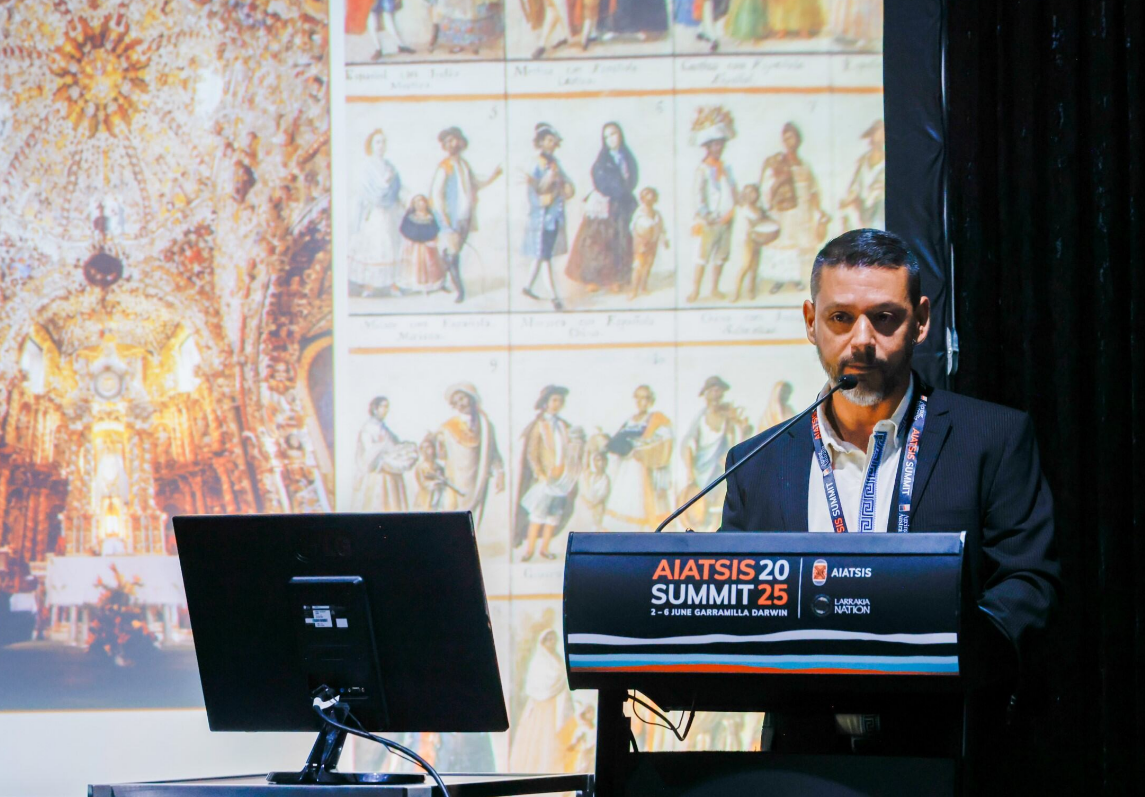
From Mexico, Octavio Murillo Álvarez de la Cadena—Director of Collections at the National Institute of Indigenous Peoples — described the Summit as a deeply moving experience.
"To walk on Larrakia Country, to share stories with Aboriginal communities, it reminded me that we are not alone. Our colonial histories are different, but our fight is the same," he said.
In his presentation, Mr Murillo Álvarez de la Cadena shared how Mexico's constitutional reforms now recognise Indigenous peoples not only as cultural custodians, but as a distinct level of government.
"Communities can now receive direct federal funding and govern themselves according to their traditions," he explained. "This shift is the result of years of struggle, and I believe Australia can look to this model."
But it was the small moments that left the deepest imprint on him.
"A child joking with us in a community—that simple act of joy reminded me that cultural strength lives in everyday connections," he said.
Joining Octavio was Almandina Cárdenas Demay, General Coordinator of Language Policies at Mexico's National Institute of Indigenous Languages.
Her message was urgent: Indigenous languages must be protected, not only in Mexico, but across the globe. "Ninety-five percent of the world's languages are Indigenous," she noted. "And yet so many are disappearing. When we lose a language, we lose a way of seeing the world."
Ms Cárdenas Demay found comfort and kinship in the Summit's focus on language revitalisation.
"Your young people here, learning their languages again—it inspired me. In Mexico, many still feel ashamed to speak our languages. But language is life. It carries our spirit, our knowledge, our identity," she said.
The delegation's presence was made possible by years of partnership between AIATSIS and institutions in Latin America. These relationships were formalised through memorandums of understanding, cultural exchanges, and collaborative exhibitions between Canberra and Mexico City.
As the week came to a close, the delegation left with hearts full of new knowledge, friendships, and hope.
"I now have new parents and new friends," Ms Jazmín Cotí Lux said, "and a deeper understanding that our Indigenous knowledge is not just ancient—it is urgent. It is the key to solving today's challenges."
Together, these international voices joined with Aboriginal and Torres Strait Islander leaders to reaffirm a global truth: that First Nations peoples, while distinct in language and geography, are united in purpose—to protect land, language, and culture for the generations to come.
Because across oceans and across continents, Indigenous peoples know: we are stronger together.