



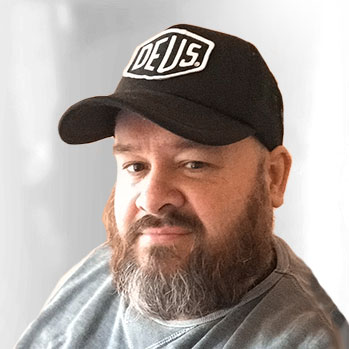

Indigenous Kanak voters of New Caledonia are looking to rally right behind the son of a one-time Union Calédonienne party president who fought for independence from France more than four decades ago.
Kanak cultural leader Emmanuel Tjibaou, who is set to follow in the footsteps of his father, Jean-Marie Tjibaou, was elected barely a month ago as president of the centre-left, self-determination political force that stands as the oldest and largest party in New Caledonia.
Union Calédonienne is considered the leading party for the 41 per cent Kanak-voting majority in the French overseas collectivity for the alliance of the Kanak and Socialist National Liberation Front.
Even before Mr Tjibaou's leadership, the party and its Indigenous alliance has opposed French President Emmanuel Macron's plans for electoral reform, through a proposed constitutional amendment to add thousands of extra voters to the electoral rolls for provincial assemblies and the national congress from Metropolitan French settlers to severely lessen the length of their residency.
After months of peaceful protest from mostly Kanak residents of New Caledonia, the draft legislation came before the French National Assembly on May 13 this year, only to trigger five months full of rioting and clashes between Kanak protesters against French para-military gendarmes, riot squads and "anti-terrorist" police.
President Macron has since abandoned the failed policy to encourage, among other outcomes, more French immigration to the Pacific, while elections for the three provincial assemblies and congress have been delayed until November 2025.
This has opened the way for negotiations with the Kanak pro-independence movement for nearly all of next year over New Caledonia's political status, and a new statute to replace the 1998 Noumea Accord.
With Mr Tjibaou calling for a pathway towards eventual independence, the 48-year-old, who has replaced his 71-year-old predecessor Daniel Goa, will play a crucial role in discussions with the French state and New Caledonia's anti-independence parties.
Speaking on TV the night of his party election, Mr Tjibaou stressed that "our objective remains unchanged: access to full sovereignty."
"However, we know that this requires in-depth discussions with others," he added.
"We supported the postponement of the provincial elections to allow time for dialogue, and the development of an agreement.
"We will go to the discussion table with a negotiation basket including fundamental elements: discussions on the pathway to full sovereignty, but also concrete commitments to stabilise our economy.
"We cannot negotiate on an empty stomach."
Earlier in the year, Mr Tjibaou ran for one of New Caledonia's two seats in France's own national assembly, winning the second-round poll on July 7 with 57 per cent of the vote.
It was the first time in 38 years that a pro-independence Kanak leader had won a seat in the French legislature and an example of a turning point in Indigenous and Melanesian politics for symbolically, at least, what is still a colonial system surviving in an ostensibly post-colonial world.
The seat had previously been held by Nicolas Metzdorf, co-founder of the anti-independence party Générations NC, who was a fervent partisan of the French Republic.
Mr Metzdorf switched seats to run in New Caledonia's first constituency in elections held in July to draw on stronger anti-independence sentiment in the Southern province that he won to sit in the national assembly seat.
After the months of conflict, New Caledonians face a shattered economy through President Macron's mishandling of policy in the Pacific and a level of uncertainty about the political future.
But in a recent TV interview prior to his election to essentially lead the future ambitions of pro-independent Kanaks, Mr Tjibaou reaffirmed a vision of building a common destiny for all New Caledonians, not just of his party's constituency.
A greater bipartisan approach to one day win at the ballot box, Mr Tjibaou considered was absolutely essential after what the Melanesian archipelago had endured to get to this point.
"We are one island," he said.
"The strength of our cultures is our diversity… we have 28 languages, but does this mean we have 28 different states within New Caledonia? No. It means there are 28 ways of interpreting how we relate to one another.
"To draw nourishment from this diversity. That's the project that the independence movement has proposed ever since 1983.
"With the recognition of our right to self-determination, we have opened up to others, to the descendants of the (French colonial) prisoners, the Javanese (indentured labourers) and all those who came here, washed up on the shores of our land Le Caillou, to whom we can say 'now we must build the society with you'."