






A minor planet discovered by a Cherokee Nation citizen has become the first to receive a name in the Cherokee language, marking a milestone in the Nation's language revitalisation efforts.
The minor planet, officially named ᎨᏯᎫᎬ (Ge-ya-gu-gv), was discovered by University of Wisconsin-Madison Professor Juliette Becker and belongs to a rare group of objects that orbit far beyond Neptune.
The name was approved by the International Astronomical Union in October following collaboration between Professor Becker, Cherokee Nation's Language Department and fluent Cherokee speakers.
Ge-ya-gu-gv is a metaphysical being called upon during prayer as a messenger to aid in healing and wellbeing.
In Cherokee tradition, the messenger resides in the highest level, known as the sky-vault, and carries communication between the Cherokee people and the Creator.
Cherokee Nation Principal Chief Chuck Hoskin Jr highlighted the significance of the achievement for the Nation and its language.
"The Cherokee language continues to be revitalised not just on this planet, but beyond and that is evident by this achievement which represents a historic milestone for the Cherokee Nation - a minor planet discovered by a Cherokee citizen and named in the Cherokee language by Cherokee speakers," Mr Hoskin said.
"Our People, our Speakers and Our Language continues to thrive and break barriers."
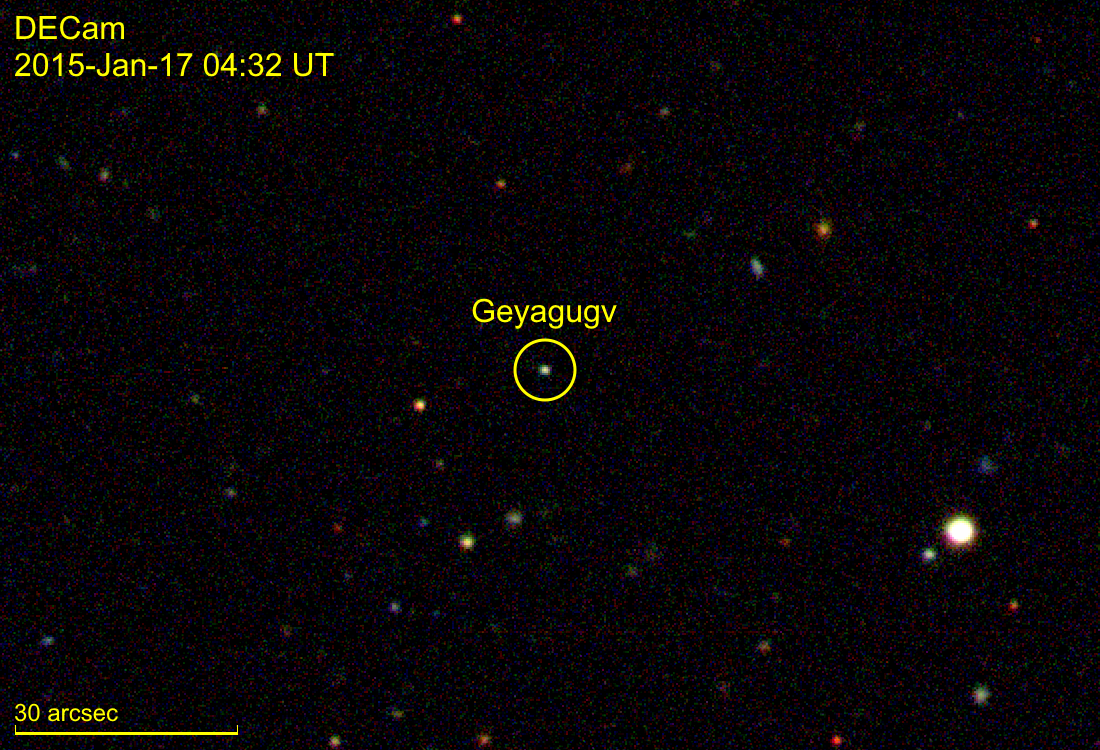
Previously designated 2015 BP519, the minor planet was first observed in 2015, with its discovery announced in 2018 while Professor Becker was a graduate student at the University of Michigan.
Professor Becker worked alongside a team of researchers using data from the Dark Energy Survey to study the outer solar system.
The object is classified as an extreme trans-Neptunian object, with an orbital inclination of approximately 54 degrees and an estimated orbital period of 8,900 years.
Professor Becker explained how its orbit distinguishes it from other minor planets.
"This isn't just any minor planet. It's an extreme Trans-Neptunian object, with an orbit that's tilted and stretched compared to the rest of the Solar System," Professor Becker said.
"It makes only brief visits near Neptune and the other planets, then spends thousands of years traveling through vast reaches of empty space."
After learning the object was eligible for naming, Professor Becker contacted Cherokee Nation in February 2025 to explore how she could honour her Cherokee heritage through the discovery.
Over the following months, Cherokee Nation's Language Department convened virtual meetings between Professor Becker and fluent Cherokee speakers to identify a name drawing on Cherokee creation stories.

Cherokee Nation Secretary of Language and Culture Howard Paden welcomed the opportunity for speakers to contribute to the naming process.
"We are proud of what this achievement represents for our language and our people," Mr Paden said.
"Our Cherokee Language Department continues to spread our language far and wide and this might be the furthest stretch - across our galaxy."
Cherokee Nation's Speakers Bureau and language experts prepared a citation explaining the name's cultural significance before the research team submitted it to the International Astronomical Union for consideration.
Ge-ya-gu-gv joins a growing number of minor planets named in recognition of Indigenous cultures and traditions.
Among them are Sedna, named after the Inuit goddess of the sea, and Leleākūhonua, a Hawaiian name drawn from a traditional creation chant.