



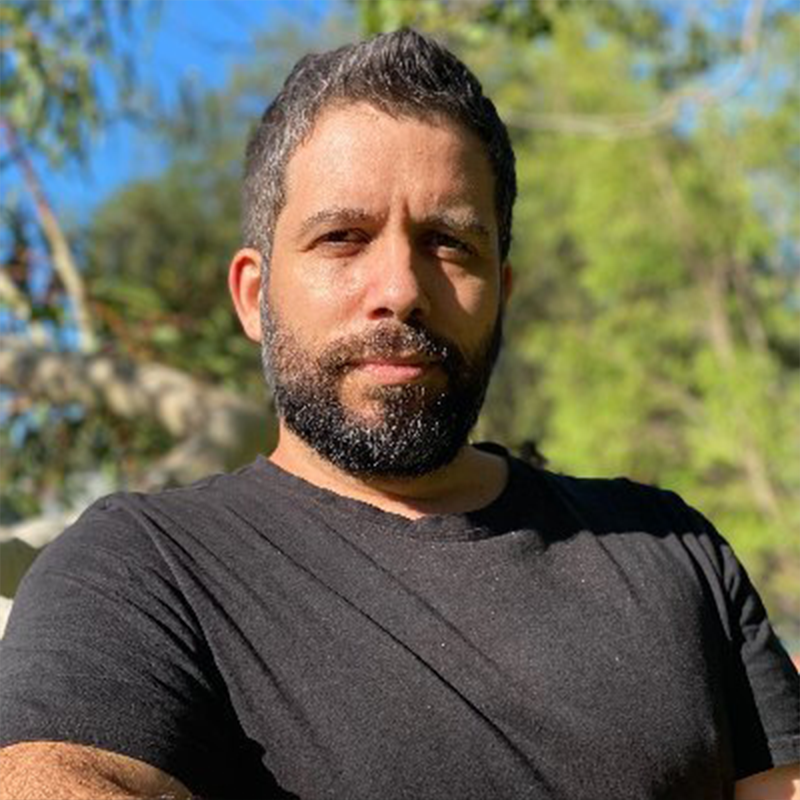

Alaskan Native Women's Resource Center executive director Tami Truett Jerue has been part of the campaign to end family and domestic violence for 44 years.
A member of the Anvik Tribal Council, Ms Jerue spoke to National Indigenous Times during the 18th Annual Government-to-Government Violence Against Women Tribal Consultation held in Tulsa, Oklahoma this month, an event involving federal authorities consulting with Tribal organisations and leaders, as mandated under federal US law.
The Violence Against Women Reauthorization Act of 2013 (VAWA 2013), combined with the Trafficking Victims Protection Reauthorization Act (TVPRA), was signed into law on March 7, 2013.
"The Alaskan Native Women's Resource Centre, we started discussing it in 2013. This was after the passage of VAWA 2013. And the reason that we really had the discussion was that VAWA 2013 basically left the Alaska tribes out. (We were) left out because of laws and policies that were not in accord with Tribal jurisdiction and other issues in Alaska," Ms Jerue said.
"Yet, Alaska tribes, Tribal people, had the highest rates of domestic violence and sexual violence in the nation at that time, and continuing, so there was a lot of disappointment in that.
"When we came together there were many Tribal advocates in the room when we had the discussion who, all of us, had been working in our own small tribal communities for decades on domestic violence issues and safety, and just trying to create tribal systems that… change those (violence) statistics.
"The (Alaskan Native Women's) Resource Centre became part of the effort of trying to bring the local expertise to our own tribes, rather than bringing in expertise from outside of Alaska - experts who didn't have as much of a handle on some of the realities of living in our communities."
Ms Jerue said the long journey had involved "many layers of work".
"We finally became a nonprofit (formally) in 2015 and have been working pretty hard ever since," she said.
"Our focus is always tribes, as in; training and technical assistance, to dealing with the issues, domestic violence, sexual violence, dating violence, stalking, sex trafficking, any and all of the intersecting issues that go along with that, one being the fact that we have many complex traumas that have been perpetrated.
"The complex trauma is really a manifestation of intergenerational traumas that have impacted our citizens and are impacting our citizens. It has increased.
"(It has) increased the vulnerability of our citizens to some of these victimizations. But we're not victims, we are maybe in little pieces of our lives, we're survivors of those things, yet there has to be a means to also heal from those things."
Ms Jerue noted the status of Native Tribes as the third sovereign in the United States, alongside the federal US and the states.
"I think that, because of the federal government's really unique relationship with tribes, in terms of us being the third sovereign in this country, that it's important that we also have the ability to have our voices heard in a way that's meaningful like through this consultation," she said, referring to the event held in Tulsa this month.
"(The) law didn't necessarily support that. And there's been a lot of legal ramifications that have created obstacles and barriers, particularly for Alaska tribes. We have several particular policies that have sometimes have, well, not just sometimes, they'd have created major barriers to Alaskan tribal governments being able to implement and change that whole scenario."
Ms Jerue said Tribal leaders and advocates are working to address shortcomings in the federal laws.
"(We are) trying to change those pieces, at the same time as trying at the local level, to help tribal governments design and implement programs that are going to help their citizens in a meaningful way," she said.
"One is always safety, against the violence, changing that that's a normal thing, because we want it to be abnormal, it should be abnormal, it was never a traditional value in any of our communities. And it was always dealt with strictly and pretty effectively.
"Sexual Violence, again, there's all kinds of rumours, I think that were started by the colonisers, that incest and other things were a part of our culture. Well, that's never been a part of our culture. Sexual violence and holding women sacred didn't mesh.
"Women as life givers were always held in a way that with respect. You know, we had rules in our communities and those rules worked and maybe that changes with modernisation… But the violence piece of that was a learned behaviour."
Ms Jerue said violence causes suffering across a community.
"It's being perpetrated so severely against the vulnerable… women, children, LGBTQ, you know, people that have differences, and even our men," she said.
"I think that it's important we come up with solutions in order to develop opportunities to make those changes that are community-centred, and also Tribally and culturally approved.
"Consultation came about because of some of the work of our sisters in back in… 2004. There was a lot of conversation with New Zealand and some kind of cultural trading back and forth.
"And so, putting into the Violence Against Women Act a particularly a tribal title, specifically addressing tribal issues. Really what it did at that point was full faith and credit with protection orders. That was really the thing that, in the beginning, it was a fairly small title, and it grew every time it was re-authorised."
Ms Jerue said the law enshrined a right to annual consultation by Tribes with the Department of Justice and Office of Violence against Women.
"And potentially what could be changed to make it more streamlined, but also more accessible for tribes to create and be in charge of the services that we needed. And again, always back to the idea of safety, being the main service," she said.
"In tribal communities we have many social issues that also create barriers to safety, housing, and overcrowded and lack of housing, infrastructure, and that's not just building infrastructure, but human infrastructure.
"The whole idea that when you live in a small community that many of you have been impacted by many levels of trauma, there's going to be lateral violence, there's going to be all of those things that don't necessarily mesh well together. But the one thing that always works, is when we, and unfortunately seems like more often we're gathering at funerals, we do the traditional way of putting our people away, or we're doing memorial type of potlatches, or we're doing other things that celebrate in our culture and bringing back languages.
"There's a lot of work to do. But this is part of that, and trying to change the dialogue, you know, that we know what we need. We do need and are actually mandated to get the assistance to develop and implement, and do the things we need to do to try to help our people.
"Safety is a huge first step. But then there's a whole lot of other steps. You know, if we're doing to tribal justice systems, we have to have something in place that can both help the person that's been victimised, but also the person that has done the victimising because they may just be as broken as the person that has been victimised."
The Anvik Tribal Council member said that in a "whole other cycle" was being created by "brokenness".
"That brokenness also needs a healing spirit. How do we do that? How do we accomplish that when we are narrowed in on only one way to spend money or get a grant?" she said.
"So it's really trying to broaden the requirements, so to speak, on how to both get funding for this, keep funding for it, and maintain the funding that's going to be more impactful than just a, you know, kind of a one shot deal."
On the subject of the importance of Tribal-led responses to violence and the factors which drive violence, Ms Jerue said her view has developed over 44 years of professional and personal advocacy.
"Oftentimes the whole community is in pain, for things that they didn't bring on themselves… They've suffered through that, and maybe have caused pain to others. Whether that was the boarding school, whether that was not being able to make decisions or keep their language, or numerous things that have impacted people's lives in our communities.
"Unfortunately, there's a large group of people from our communities that had the same types of experiences - that were never healed, never talked about, and basically were swept under the rug, and so then there's bad behaviour.
"A loss of identity (as a Tribal person) can also then have a loss of feeling a part of. And I think that that can create a functioning that doesn't work. I don't like the word dysfunction because I think we all function, we may not function, how you or I function, but we all function… that's kind of an individual determination."
Ms Jerue noted that tribes across the United States "need a lot of work".
"And there's a lot of internal work that has to happen. But the issue is, is that we're related in a way that that internal work is similar. And by trying to bring back things that we lost, it does help reestablish and help to create almost like a peace or a bonding of some kind. And I think that that can be helpful," she said.
"I do think we need modern strategies, too, but I think tribes can implement that as well. And it's also the idea that… we have to have more than one person healing, and for the community to maintain that healing, and wellness and create a system that's going to be more impactful and effective.
"Because if you only get one person, well, I bet you they're going to get tired of trying to navigate an unwell system, and then they're going to want to leave. And so, if you go at it at a community level, that hopefully creates a system that's a more healthy system than it is now."
She said approaching the issue as a Tribal community "creates a more healthy identifying system… a helping yourself kind of situation".
"There's a saying, and I've heard it a few times, but you know, hurt people hurt people, but healed people heal people,' she said.
"I think we have to look at both sides of the coin. And if we don't, then I think we're there's something always missing; You don't have a belonging, you don't have a place to go home to.
"Maybe there's tribal communities that aren't healthy enough to go home to - that may very well be - but maybe you're going to find your own little community that is healthy for you. I think it's important to give ourselves that chance."