



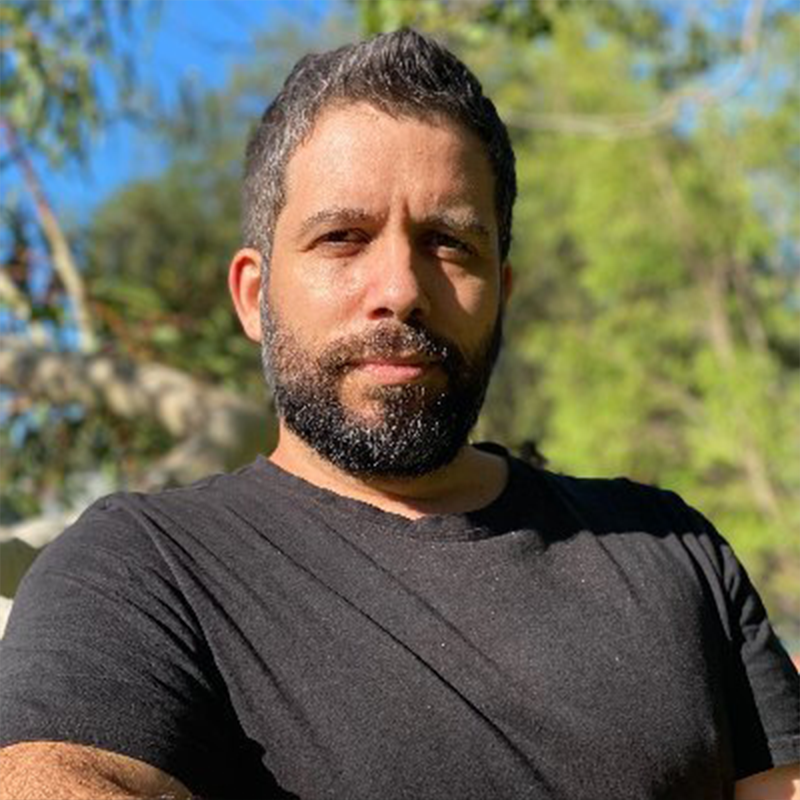

A former deputy police chief who led a successful search for human remains in landfill has thrown his support behind the families of missing First Nations women who are calling for a similar search in Manitoba, Canada.
Sean Sparling, now CEO of Investigative Solutions Network Maskwa, an Indigenous-owned investigative firm, told CBC on 18 July: "It can be done. It's just a matter of somebody having the political will to do it."
Mr Sparling made the comments this month, just days after the City of Winnipeg was granted a court injunction to remove a blockade from an access road to the city-owned south Brady Road landfill, which began earlier this month after local authorities resolved not to search the privately-owned Prairie Green landfill.
Police believe the remains of Indigenous women Morgan Harris, 39, and Marcedes Myran, 26, two of four victims police allege were killed by one man who has been charged with four counts of murder, were deposited last year at Prairie Green northwest of Winnipeg.
Both women were of the Long Plain First Nation.
The community members holding the blockade are seeking government support in a proposed search of Prairie Green, for the remains of Ms Harris and Ms Myran.
Manitoba Premier Heather Stefanson originally joined First Nations leaders and families of the women in calling for a "feasibility study" to see if a search was possible. The study determined a potential cost of CA$184 million and schedule of three years, and Ms Stefanson announced the province would not support a search of the site due to "health and safety concerns".
However, many have pointed out that such concerns have not been a barrier to similar searches elsewhere in Canada.
In September 2021, Toronto police officers found the remains of Nathaniel Brettell after scouring a gigantic city dump for several months.
After his body was found, Mr Brettell's sister said: "It gives me peace… I'm thankful that my brother's remains have been found because it gives me closure."
After the court injunction to remove the blockade was granted, Red River Métis man Matthew Oliver wrote that "again, 'Canada is a rule of law nation' means concern for some, while others are disposable".
"Once again colonial violence is used to silence and remove Indigenous protectors. We remember. Also remember WPS (Winnipeg Police Service) botched MMIWG (Missing and Murdered Indigenous Women and Girls) investigations."
Mr Sparling was the major case manager of the Sault Ste. Marie investigation into the 2011 killing of Wesley Hallam, 29, who was stabbed at a house party in the Ontario city before his body was dismembered.
Police searched for Mr Hallam's remains by hand at three separate landfills in and around Sault Ste. Marie, including one in Michigan (south of the US-Canada border), before trucks carried material from those landfills to a modified recycling processing plant, where officers lined a conveyor belt to search for Mr Hallam and were able to find some of his remains.
Mr Sparling told CBC on 17 July that Winnipeg is dealing with "two to potentially three victims in the same landfill, and the tonnage is greater than the [Hallam] case, but other than that — the circumstances, the landfill, the process and everything are identical".
On 7 December Kiera Harris, daughter of Morgan Harris spoke to media in Ottawa and told police: "If you won't search the landfill, then we will."
A Change.org petition started by Travis Barsy in December now has 40,000 signatures calling on City of Winnipeg authorities to order a search the both the south Brady Road and Prairie Green landfills.
"The Winnipeg Police will not search the landfills even though they believe that the remains of Morgan Harris, Marcedes Myran and Buffalo Woman are at one or both sites," it states.
"We need to demand that dumping stops at both sites and find a temporary area, regardless of costs, so there is no further interference or delays with the search.
"These women deserve to be honored and brought home to their families. Questions need answered and Justice to be served."
Mr Barsy writes that failing to find the bodies "could prevent true Justice to be served when sentencing their killer".
He described Winnipeg as Canada's "ground zero" for "Missing and Murdered Indigenous Women, Girls and 2 Spirit cases".
"We need to stand together and demand that all of our Women deserve to feel safe, cared for and that nothing should get in the way of Justice."