



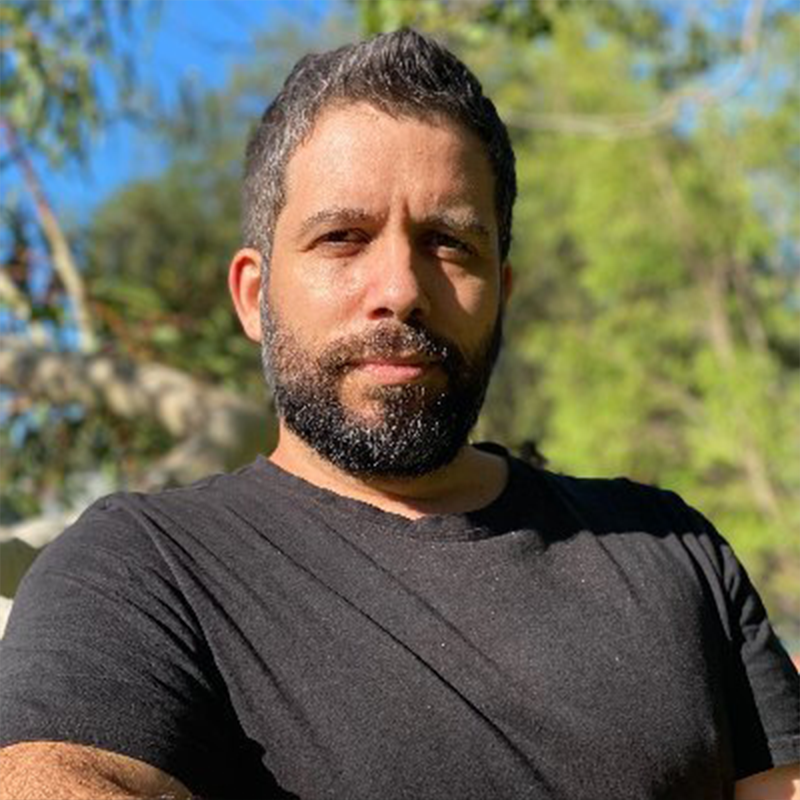

Economic empowerment of Indigenous communities, much touted by the federal government, is hindered by the absence of constitutional recognition and constitutionally protected rights for First Nations people in Australia, Professor Megan Davis warns.
The UNSW Scientia Professor, who holds the Balnaves Chair in Constitutional Law, the Whitlam Fraser Harvard Chair in Australian Studies at Harvard University and the Bok Global Professor at the University of Pennsylvania Carey Law School told National Indigenous Times that while there is a tendency to look at the economic power of First Peoples in the USA and Canada, "it's not a useful comparator for Australia, because we are so different to every other common law country in terms of the way we were dispossessed and in terms of how rights have unfolded since 1788".
"One of the interesting ideas about the Uluru Statement in itself, is that it was an Australian process that led to an Australian statement that was tailored to Australian political and legal conditions," she said.
"For example, when we're looking at the economic developments in Canada or in the US, we're applying that experience flatly and without nuance to this new economic empowerment agenda (in Australia). The bulk of what people are talking about is not achievable in Australia, because most of those economic opportunities have arisen because of constitutional recognition, that their rights are very strongly and firmly embedded in the constitutional order. It's not possible to do it without those kinds of rights."
International comparison and contrast
Professor Davis said her time at Harvard has given her space to think deeply about Australia's constitutional future and the international context in which Indigenous rights develop.
"Being at Harvard has allowed me to step back and view Australia's situation through a comparative global lens; to see how nations that have constitutionally recognised their Indigenous peoples have built enduring frameworks for wealth, participation and accountability. It's reminded me how far behind we are in embedding those foundations in our own legal system," she said.
"When you look at government policy being galvanized exclusively around Traditional Owners as settler-sanctioned native title holders, you then have to think about the fact that the federal government policy is a skewed policy, endorsing the native title regime that has excluded vast numbers of First Nations people.
"It's not that people aren't Traditional Owners in that sense. It's that the state has fenced in who is and isn't a Traditional Owner in a very unjust way. It's not fair.
"In Mabo, the High Court said most Aboriginal people will not have native title because of acts of colonisation, it will have been extinguished. And for those who can they are, by and large, in regional and remote areas, furtherest from first contact."
.jpg)
Deck stacked against Traditional Owners in the Native Title system
Professor Davis noted that the continuity requirement established in the Yorta Yorta case made it particularly difficult for Indigenous people who had been driven from their land to gain recognition as native title holders.
"You have a geography that sets up winners and losers in dispossession, or a hierarchy of dispossession. Paul Keating set up a redress package for those people who were dispossessed by acts of colonisation, this was the Land Fund and the Indigenous Law Corporation (now the Indigenous Land and Sea Corporation). But the bulk of that money was not directed to the displaced and urban dispossessed as promised, decisions were made to direct the redress funds to traditional owner organisations and to people who live in the north. Nobody wants to talk about the fact that the displaced and dispossessed were by and large excluded from that redress package," she said.
"And today we have a doubling down of it through the so-called economic empowerment agenda. As a public policy, how is that fair? Who's talking up for and representing the interests of those whose lands were dispossessed through acts of colonisation? There are important and serious conversations that need to be had."
Constitutional recognition makes a difference
While 'gaps' exist between the Indigenous and non-Indigenous populations in the United States, Canada and Aotearoa/New Zealand - the gap in Australia is more severe than in those three jurisdictions.
"I think (the contrast in land rights systems) probably has a lot to do with it (the size of Australia's gap)," Professor Davis said.
"I think land recognition is a part of it, but I think broader constitutional recognition is a big part of it. I always return to constitutional recognition partly because I'm a constitutional lawyer, that's my job. But, in the 20 years I've worked with the United Nations as a global expert and human rights lawyer and looked around the world, Indigenous populations flourish better in countries where they're recognised and acknowledged by the state.
"It makes a huge difference to the way people feel about themselves when they're acknowledged by the rest of the country. And that's something that we've never done in this country. And I think a lot of the strong land rights that have come in those other countries has come as a consequence of that constitutional recognition. It's not solely treaty, as many think. It's constitutional rights that make the difference."
Professor Davis posited that constitutional recognition "creates a completely different legal and political framework".
"By and large across the board, the substantive rights that are required to allow or to have our people at the table aren't there. And so, in the absence of that... we risk being left behind. Because the truth is at the end of the day, they don't have to consult," she said.
The Professor described constitutional recognition as laying a foundation on which to build.
"In the absence of structural recognition in the constitution, what you have is Australian democracy. And if you don't have any status in that democracy that enables you to shape the laws and policies that affect your communities, then it's really hard. It's really difficult. And so South Australia, obviously, pioneered (the state-level Voice to Parliament)," she said.
"Recognition provides legitimacy. Legitimacy is an important public law principle and it's hard to retrofit that in the absence of a first contact treaty."
"And, you know, the sky doesn't fall down. It's not quite as exciting as some things that people want, but it is practical. And that is the bread and butter or the day-to-day work of Aboriginal communities in Australia is having to grapple with government and bureaucracy.
"We are not like America; we don't have a strict separation of powers. Our separation of powers is blurred between the parliament and the executive and the minister and the bureaucracy. It creates a blind spot in decision-making. And it's hard to seek accountability. That is a hallmark of Australia's legal political system; accountability is difficult."
'Answerability' is essential to end buck passing
Professor Davis said it was a smart strategy on the part of Aboriginal communities to pursue accountability mechanisms.
"They have a huge impact upon the day-to-day life of Aboriginal people... I noticed the Victorian treaty legislation... uses the word "answerability" which I think is a better word than accountability, because you're asking for answers. I watched all of the most recent Senate estimates... and there's no answerability going on. There's a lot of buck passing to the states and territories and shuffling of papers," she said.
"There's a sort of mechanism of accountability in place, but that means you show up and people ask you questions, but it doesn't mean you answer them. Seems to be the way the system works. It's so frustrating. I lamented the fact that we'd lost the dedicated Senate Estimates day set up after the abolition of ATSIC."
The status quo
Professor Davis said that in the wake of defeat of the Voice at the October 2023 referendum, Australia had entered an "odd period".
"The federal government has decided there's not a lot of political currency in Indigenous affairs. They've just reverted to the status quo, which they inherited from the Morrison government," she said.
Professor Davis noted that in Australia's federal system the buck is passed back and forth, the two levels of government can be at odds, and progress is hindered.
"We're a federal system. And the hallmark of Closing the Gap version two is to push everything back to the states and territories. So, the blame for any failure in the framework is - as you saw during Senate Estimates - it's shifted back to the states and territories and to Aboriginal organisations, Aboriginal community control, and the Coalition of Peaks," she said.
"These are really important service organisations for our people that are under-resourced, but also have to carry the blame. And then we have the Commonwealth, that's kind of part of version two was to disavow themselves of any responsibility. Julian Leeser famously said of the Commonwealth's role 'we're the ATM, but we don't do anything else'. My concern about that is that part of the vote in 1967 (the referendum to give the federal government jurisdiction over Indigenous affairs) was that everybody in Australia could see that the states and territories didn't do a good job as the leader in Indigenous affairs.
"I think the biggest issue is, we've got a closing the gap agreement with all these commitments to achieve all these things up until 2032. But some of the states and territories are explicitly disavowing the role they need to play and things like bringing down youth incarceration, for example."
The Northern Territory and Queensland governments, where a series of measures have driven up incarceration, particularly of youth, have expressly stated that closing the gap in the justice system is not a priority.
"There's a lot of tension there," Professor Davis said. "But, the Commonwealth has the power to take some leadership role here - particularly where they are funding the states and territories - and they're choosing not to. On child incarceration they can use the law to stop the reduction of the age of child criminal responsibility and they choose not to.
"I think that's where people are rapidly losing faith with the closing the gap agenda, which unfortunately has become the sole agenda that the Commonwealth is focusing on. Everyone can see it's not working."
Professor Davis described the current situation as having entered a phase of "regulatory ritualism... where they've got some sort of regulatory system, they pay lip service to it all the time. But the reality is, they don't either support it, or they don't want to fund it".
"Everyone can see that it's not working, but no one's allowed to say it... They don't want to criticise it because they worry they'll lose their funding. And that's why so few people are talking publicly.
"I'm not the only person to say it's clearly not working. There's a problem here. But the current settings don't allow for any voices except for the ones that the government wants to listen to."
Looking to the future
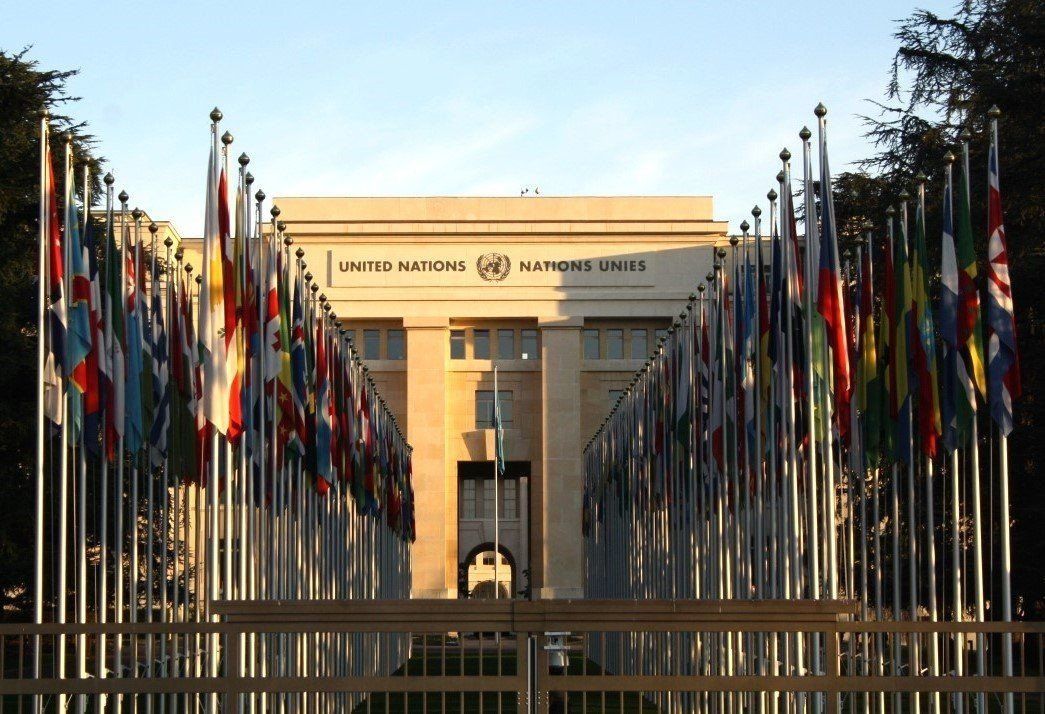
Professor Davis noted that many rights protected by international law are the responsibility of the federal government.
"The international conventions on rights of the child, protocols on torture and other things like that, the federal government's responsible for their ratification and for it being in place at a state and territory system, but they're not stepping up in that regard," she said.
"Over 20 years, the federal government has taken that less and less seriously than it used to. You can see that in the slow reporting on UN mechanisms. I think that's something we have to take into account when we think about how we advocate for particular issues, because you've got to find a way of bringing the Australian people along. That's really critical. That might involve a shift in the way that you articulate things or argue about things. I think that's why the UN Declaration of the Rights of Indigenous Peoples, which I had a hand in drafting, receives no traction.
"They've got the power to do these things and they're choosing not to. And that's something people need to contemplate when they go to the ballot box."
With an eye to the future and the question of political power, Professor Davis noted that more and more voters are moving away from both Labor and the Coalition.
"You can see the voting patterns... Australians have lost faith in the major parties. That is a certain trend. That is something that people need to think about and it's an opportunity for our people."