





Following a long period of advocacy and guardianship from Māori iwi (tribe) leaders, a culturally significant food source has received legal protection off Taranaki on the west coast of Aotearoa's north island.
From mid-December, a new sub-section of New Zealand's Fisheries Act prohibits the harvest of almost all shellfish for up to 70 kilometres off the coast along the region's entire 260 kilometre coastline.
The legislation is set in place for two years and does not apply to ordinary fin-fish.
Local Māori representative body Taranka iwi chair Jacqui King said "mass attacks" were to blame, particularly concerning the dwindling numbers of large sea-snails, or pāua, a local favourite.
"Many of our whānau (extended family) and local community rely on this as a main source of nutrition and cultural sustenance. We had to act urgently to ensure our taonga (treasured possession" was protected and our tikanga (knowledge) and kaitiaki (guardianship) decisions were taken seriously," she said.
The formal move follows a self-managed cultural ban, or rahui, adopted by local hapū (tribe leaders) since January 2022 following years of overf-ishing decimating numbers of their taonga.
Former New Zealand MP and Taranaki Kaumātua (respected elder) Mahara Okeroa was instrumental in leading the charge and said the process had been exhausting.
"The volunteers have been out there week after week, day after day over the past year to protect the resources," Mr Okeroa said.
"Every shellfish has been under threat. Rocks have been scraped clean, anything that's edible has been taken."
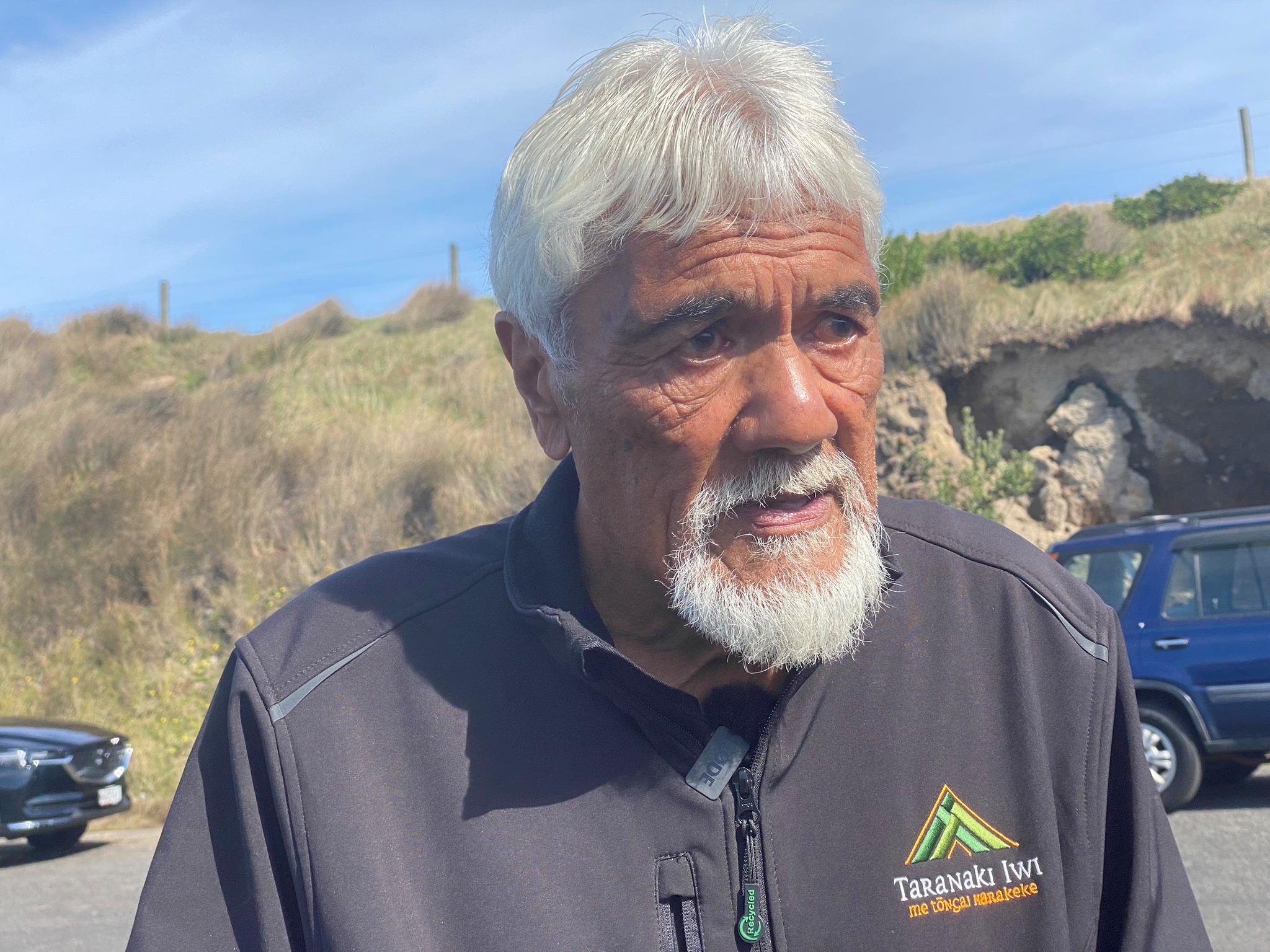
Mr Okeroa said New Zealand's Indigenous people have a "reciprocal one-ness" with the world around them, and for his iwi; to the sea, reflected in a long history of respect and preservation of the environment and food sources.
"There is a large number of New Zealand residents who had out of all proportion impacted on our seabed and our food resources without due regard to the coast system and its impacts in sustainability," he said.
Despite Taranaki iwi's lawful exemption, Mr Okeroa explained his people are committed to foregoing their rights, adhering to the legislation and standing cultural ban as both an example and solidarity.
"We want to do this as a community," he said.
"People who've grown up on the mātaitai (seafood) are sacrificing a food source that's essential not only for their tīnana (body) but their wairua (spirit). But more important to them was adding impetus to what we're asking others to do."
Mr Okeroa and fellow Taranaki elder Fran Davey were grateful for the support from the wider community.
"When we had our community hui (gathering) this year everyone came to the table. We had boating clubs, farmers, fishing clubs, whānau, surfers, councils, and the scientific community," Ms Davey said.
"I like to think of it as the power of the pāua. The pāua, or lack of it, has united people."