




Fiji's Minister for Environment and Climate Change says the permanent impacts of climate change are a reality, not projections, faced by Pacific communities as a symposium attempts at strengthening evidence bases to turn advocacy into action.
Minister Mosese Bulitavu opened the inaugural Research Symposium on Loss and Damage in Pacific Small Island Developing States in Savusavu on September 16.
Pacific-led research and data is crucial to future-planning, Minister Bulitavu argued.
The event brings together more than 150 researchers, policymakers and community leaders.
Central to discussion, debate and negotiations, with focus on Small Island Developing States (SIDS), is 'loss and damage' - described as 'the adverse effects of climate change that cannot be prevented or mitigated' by international member-based development organisation Pacific Community (SPC), formerly South Pacific Commission.
The Loss and Damage Fund, a global financial mechanism to assist developing nations with funding to recover from unavoidable impacts, was established across COP27 and COP28 summits between 2022-24.
"Strong policy depends on strong evidence. By bringing governments, researchers and regional organisations together, this symposium builds the case for finance that flows directly to Pacific communities," Monash University's Professor Paul Dargusch said at the symposium.
Professor Dargusch is Director of Monash's Pacific Action for Climate Transitions Research Centre.
Credible research is key to accessing the Loss and Damage Fund, he added.
Monash co-hosted the symposium with Fiji National University and SPC.
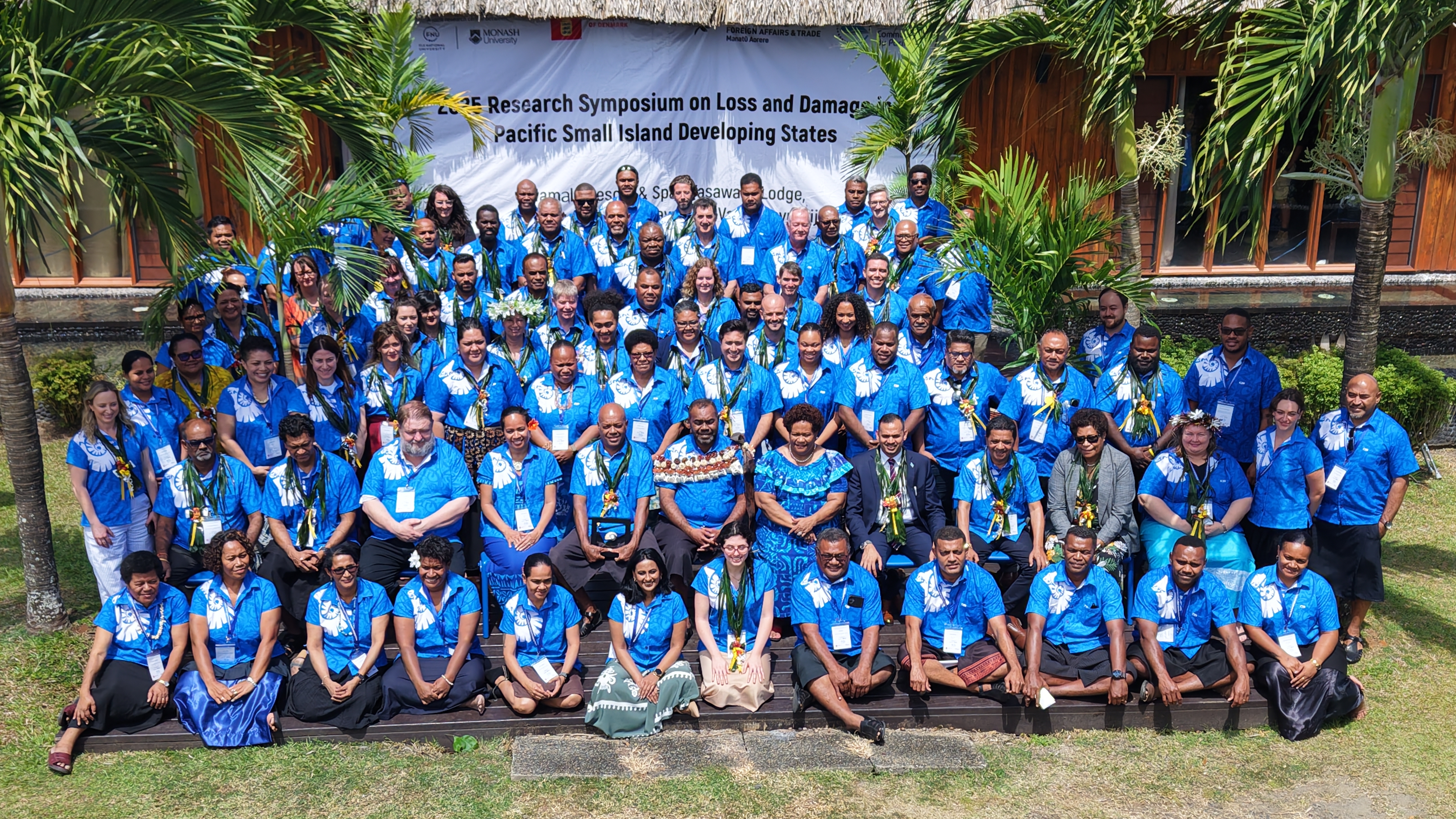
The gathering had been described by SPC as an opportunity for communities, policymakers, climate negotiators and organisations to build their evidence-base of data 'to support loss and damage planning processes and requests for access to financing under multilateral climate mechanisms'.
"This is about knowledge that governments can use for relocation planning, for water security, for accessing finance," SPC deputy director-general for operations and integration Maria Fuata said.
"By bringing together lived experience, traditional knowledge and scientific data, we can shape responses that are regionally led and globally credible."
National governments, universities, regional organisations, representatives from the private sector and multilateral development banks are on the agenda to deliver presentations.
Sessions also included looks at water security and impacts of climate change away from economics.
This includes the impact on identity and culture.
"Our islands resist their future under water, and our people persist to survive the impacts of climate change," Fiji National University's Professor Unaisi Nabobo-Baba said.
"At FNU, we are committed to strengthening partnerships on loss and damage, and to finding solutions together.
"This symposium must be more than words, it is in our communities that our thinking must show impact. With powerhouses from across the Pacific gathered here, I believe this symposium will spark real change."
In 2016, Cyclone Winston devastated Fiji.
Minister Bulitavu said in 36 hours, the deadly and destructive severe cyclone, "wiped-out" one third of the country's economy.
"These are not projections, this is our reality," Minister Bulitavu said.
"This symposium strengthens our negotiating position and helps design systems that truly serve those most at risk".