


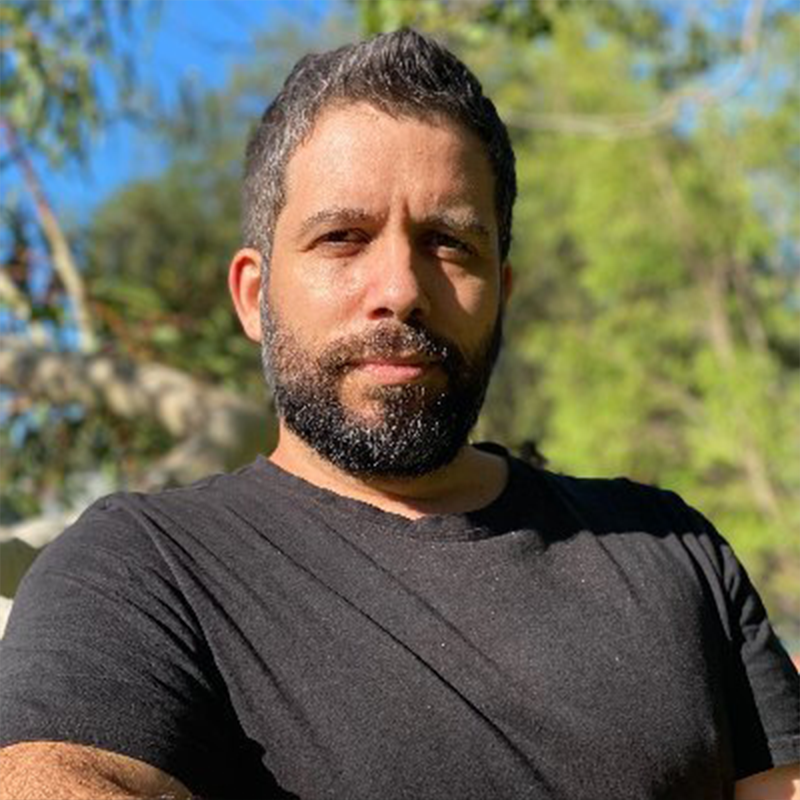

As a child Bay Mills Indian Community (Ojibwe) member Bryan Newland suffered from tuberculosis and had to travel up to 45km to see a doctor. The experience was among many that drove him to take a leading role in his community, ultimately serving as Tribal President and, since September 2021, as the US Department of the Interior's Assistant Secretary for Indian Affairs.
He told National Indigenous Times that listening to tribal communities was vital to addressing the needs of more than 570 distinct and unique nations across the United States.
"Prior to serving in this role, I was myself an elected tribal official. And I was the president of my tribe, which is a small land-based tribe, not a wealthy gaming tribe, or oil and gas tribe, and not necessarily a very politically prominent or active tribe. I recall from my time there how valuable it was for me to be able to connect with federal and state officials on matters of importance to me," he said.
"I tried to bring that perspective here in making sure that in this role I'm keeping my door open to tribal leaders from all tribes, if they need to engage with me about things that are important to them.
"I often reinforced to our team, that we have what we call a trust responsibility to all 574 federally recognised tribes, and we have a trust responsibility to each federally recognised tribes. So that means that we have to have a dual focus, on the one hand looking at how our work affects all tribes, but also how it affects each tribe. I try to keep that in mind and recall from my experience, how our policies here in Washington DC impact people on the ground."
Mr Newland said leaving decision-making to the sovereign tribes had been the most effective way to drive progress.
"Undoubtedly, unquestionably, the biggest success that the United States has had in making life better on the ground for Indian people is to leave the decisions of government to the sovereign tribes themselves, and not come in and try to dictate from the federal government to tribes about what they need to do to make life better in their communities," he said.
"And to pair that up with financial support. We call that a policy of self-determination, which is reflected in our laws here in the United States. When you have the federal government, providing the resources to tribal governments, getting out of the way so that they make their own decisions with their own sovereign authorities, and that we protect that sphere of sovereign authority from others trying to chip away at it. That's where tribes are successful.
"Many tribes have leveraged that into business success through gaming, through other types of economic development, energy development, and the key part of all of that is protecting the right of indigenous people to govern themselves."
The Assistant Secretary said greater representation of Native Americans in prominent positions had played a role in empowering communities.
"I look to Secretary (Deb) Haaland here as an example, and just her presence at the decision-making table here (in DC), as a native woman, has not only brought that perspective to the places where important decisions are made, it's inspired so many people to say, 'I can do that', when you see famous athletes and artists, and activists, from tribal communities, that's that is inspiring young people in tribal communities to follow their example," he said.
"It makes it easier for people to follow their example, because the door has been opened, the path has been blazed. I definitely think that this increased visibility, this increased representation, has commanded respect for Native people here in the United States. And it's opened doors for people who want to follow in their footsteps."
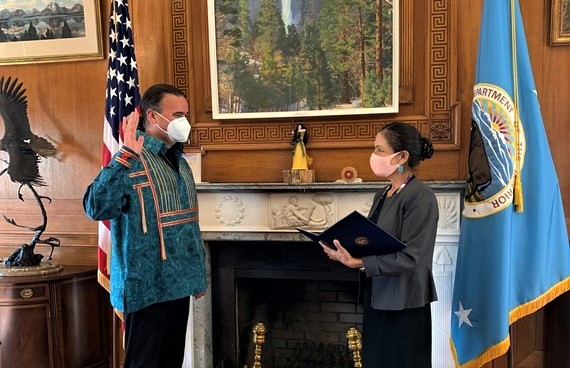
Mr Newland noted that on his recent visit to Australia he met with Aboriginal community leaders and other members across the country.
"They all talked to us about the closing the gap in many of these things. We have a lot of these same things here in the United States, the same disparities and social indicators of health and it really is a legacy from colonisation, you know that process took hundreds of years, the process of colonisation, and it was violent, it resulted in a transfer of wealth from Native people to others. And, now we're faced with dealing with that legacy," he said.
"That's why you see violent crime rates against the Indian people, disproportionately high life expectancy, shorter income levels, shorter, disease, incidence, higher, all these all these bad things. In some respects, in some places, it is getting better. But we have a lot of work to do, particularly when it comes to safety, and health, in tribal communities.
"That's in one of the challenges we face here in the federal government, is that the laws create all these all this confusion about who's responsible for public safety, and public health and tribal communities. And so, we're trying to bring some clarity to that and support tribes in that effort. That's a tangled web that was woven over centuries of colonisation, and we've got a lot of work to do. It is getting better in some places, just in my lifetime.
"Things like Indian gaming (for example, casinos) have been a real boon to many tribal communities where we've seen a lot of people employed, rich, middle class lifestyle. But that isn't the case everywhere, as you know.
"Then we've got places like in Alaska, where communities are dependent on the lands and the waters for their food every day. So, things like climate change, as it goes on… we may see things worsen if their food sources go away.
"We've made a lot of progress in some areas and some places, but on the whole, we've got a lot of work to do. In this administration under the President and Secretary Haaland, we're really trying to focus on those public safety and public health issues, to set a good baseline. And that's going to require us to kind of untangle a lot of these conflicting laws and policies that we've built up over 200 years."
Mr Newland reinforced the crucial nature of self-determination and sovereignty in the push to advance the rights and the quality of life of the First Americans.
"When I was a kid growing up in my community, we used to have to travel 20 or 30 miles to see doctor. And maybe that doctor wasn't even available to us. When I was a young child, I had tuberculosis, which is a disease we associate with third world countries, right?" he said.
"And now in our community, because our tribe has been able to determine its own path and had resources invested in it, through the federal government, has developed a state of the art health centre, right in the community. So, not only does it deliver the health care, and dental care and mental health, preventative treatment, all these things available rate for people, right in the community for the people who live there, it also creates job opportunities, career opportunities for people to work there.
"It's actually become a leading healthcare provider for people who aren't native, who live in the surrounding areas… That's really what's possible when the federal government does it right, by empowering tribes, protecting their ability to make decisions for themselves, and then getting out of the way."