




The International Organisation for Migration (IOM) and Fiji's Ministry of Environment and Climate Change have launched the Climate Catalytic Fund, a fast financing mechanism aimed at getting practical climate adaptation projects into communities facing high displacement risk.
The fund is designed to translate climate risk data into locally led action, with communities supported to develop proposals and deliver projects on the ground.
Its first funding cycle will prioritise communities in Ba and Macuata provinces, which were identified through the Risk Index for Climate Displacement and the IOM's Climate Mobility Innovation Lab.
Fiji's Permanent Secretary for Environment and Climate Change, Dr Sivendra Michael, placed the fund in the context of long-standing gaps between assessment and delivery.
"We have the data. We know where the risks are. We know which communities are exposed," he said.
"What has been missing is the bridge between that knowledge and real action on the ground.
"The Climate Catalytic Fund serves as a resource bridge."
The Climate Catalytic Fund will finance adaptation measures for communities choosing to remain in place, including flood and drainage improvements, riverbank and coastal protection, climate-resilient livelihoods, and nature-based solutions.
The approach links funding to displacement risk mapping so support can be directed to areas assessed as facing acute pressures.
The Ministry's Project Development Unit will work directly with communities in Ba and Macuata to provide technical support during proposal development. The model is intended to reduce barriers that can prevent communities from accessing climate finance, including limited capacity to meet technical requirements.
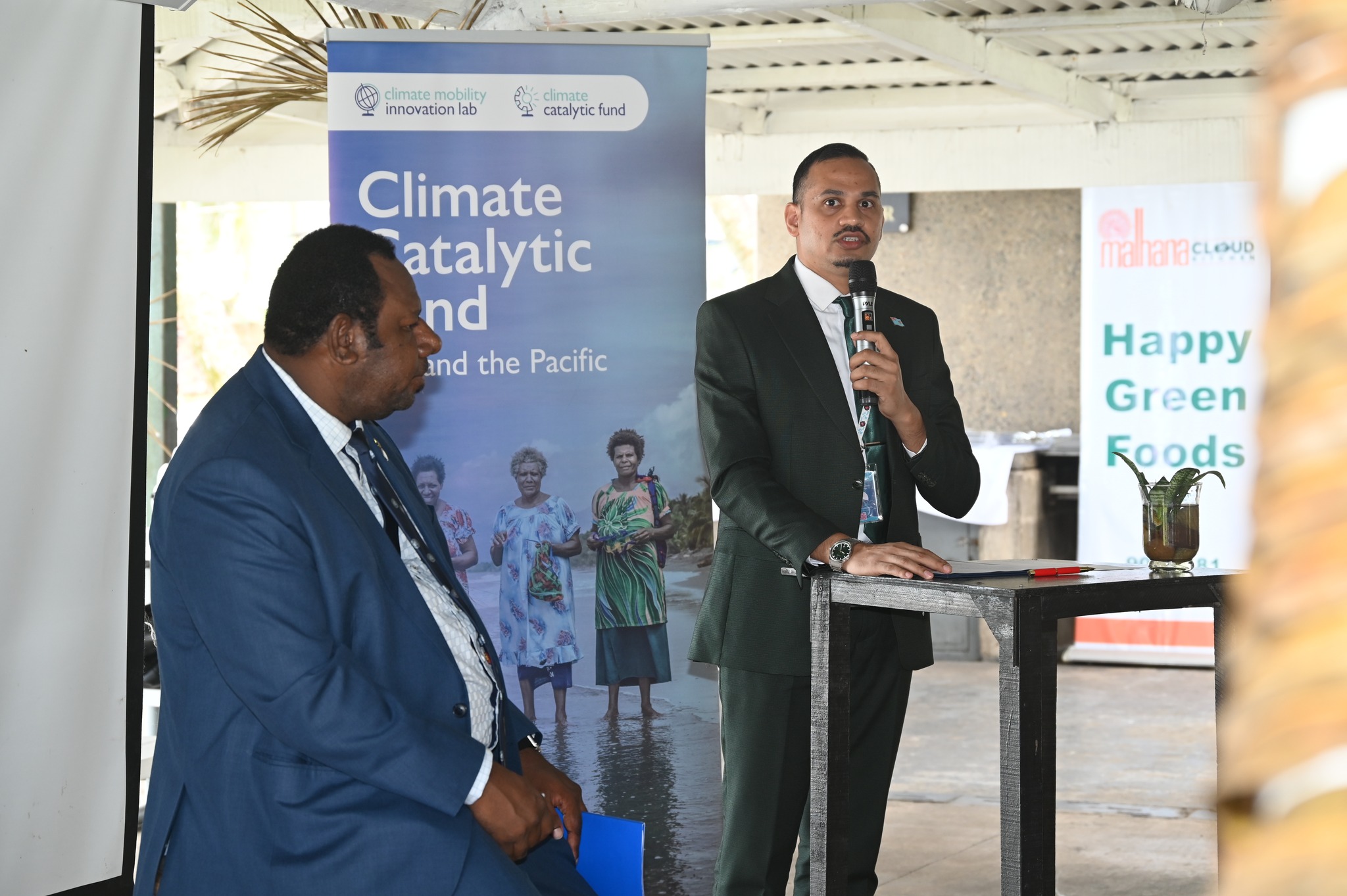
"We cannot continue to design funding mechanisms and then expect communities to compete for them without support," Dr Michael said.
"That approach leaves the most vulnerable behind."
The Ministry signalled it would help translate technical requirements into practical steps so communities can submit eligible applications.
The fund's first cycle has been described as supporting small to medium community projects with a focus on quick-impact actions.
Reporting from the symposium said individual projects can range from US$5,000 to US$25,000, and each of Ba and Macuata could receive up to US$25,000 in the first cycle.
The targeting was a way to allocate resources early, rather than waiting for pressures to escalate into crises.
The Risk Index for Climate Displacement was described as combining scientific data on hazards, exposure and vulnerability with insights directly from communities. The intention is for investments to be evidence-based while reflecting the lived experience of communities expected to carry the impacts.
The inaugural Climate Catalytic Fund Fiji Symposium convened in Suva with support from European Union Humanitarian Aid, bringing together government, regional institutions, academia, private sector partners, development organisations, and community leaders to strengthen collaboration and investment in climate resilience and climate mobility solutions.
The event concluded with partners signalling collaboration through Letters of Interest, memorandums of understanding, and co-financing commitments linked to community-centred climate action.
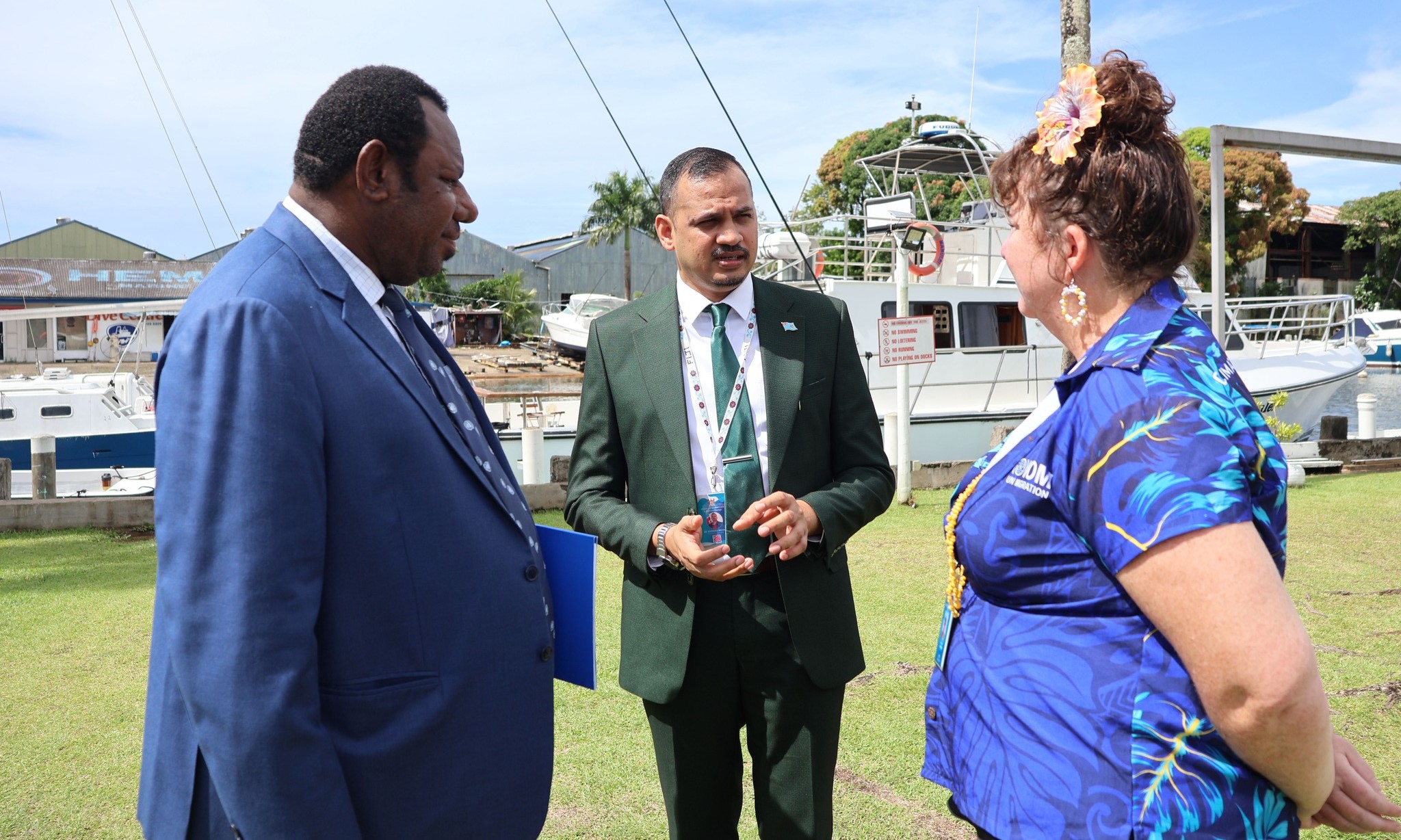
The symposium described the fund as supporting community-led actions in areas facing heightened displacement risks. The fund was also framed as requiring flexible support so communities can design and implement solutions that reflect local priorities.
"The Climate Catalytic Fund targets community-led actions particularly in areas facing heightened displacement risks," Dr Michael said.
"It recognises the need for flexible, locally-driven support, allowing communities to design and implement solutions that truly reflect their realities and priorities."
The types of projects listed for consideration include retrofitting coastal or riverine infrastructure and strengthening flood-prone areas.
The symposium also pointed to nature-based seawalls, reef and mangrove restoration, and other measures aimed at protecting ecosystems while reducing exposure for nearby communities.
The IOM's Fiji Climate Mobility Thematic Lead, Ms Angela Sanders, described the fund as a catalyst for locally driven climate risk solutions.
Ms Sanders noted that similar Risk Index for Climate Displacement-linked funds are supporting high-risk communities in the Philippines, Indonesia and Tuvalu.
The Climate Catalytic Fund is linked to Fiji's broader climate planning settings, including Fiji's Nationally Determined Contribution 3.0 launched in late 2025.
A Costed Implementation Plan is also being developed to translate policy commitments into practice, with a pipeline of projects expected to be informed by indicator targets across key sectors.
The IOM said the symposium outcomes marked a step towards turning partner commitments into community-centred action.