




In July, after a legal battle lasting more than two decades, the Tacana II Indigenous people in Bolivia obtained a legal title to their ancestral land, but their struggle is far from over.
Mongabay reports that while the recognition grants the Tacana II people full legal ownership, Indigenous leaders and researchers note security protections are not guaranteed due to state political insecurity, the lack of enforcement of environmental regulations, and invasions by illegal actors (including miners and loggers).
Tacana II Río Madre de Dios Indigenous Communities Center (CITRMD) president, Roland Mejía, told the news outlet: "In reality, the title is a legal security of collective ownership of those families that form part of this territory. But the title alone will not defend; it must be defended by the actions of the community leaders so that the collective right to this territory is respected."
The 272,379-hectare territory north of Madidi National Park and west of the Bajo Madidi Municipal Conservation and Management Area in Abel Iturralde province serves as a biological corridor, connecting protected areas critical to the survival of more than 50 vulnerable plant and animal species, including the near-threatened jaguar.
For decades, the Tacana II people have been threatened by logging companies, gold miners, barraqueros (settlers) and state authorities attempting to invade and exploit their ancestral lands.
The Territory is home to four Tacana II communities: Puerto Pérez, Las Mercedes, Toromonas, and El Tigre.
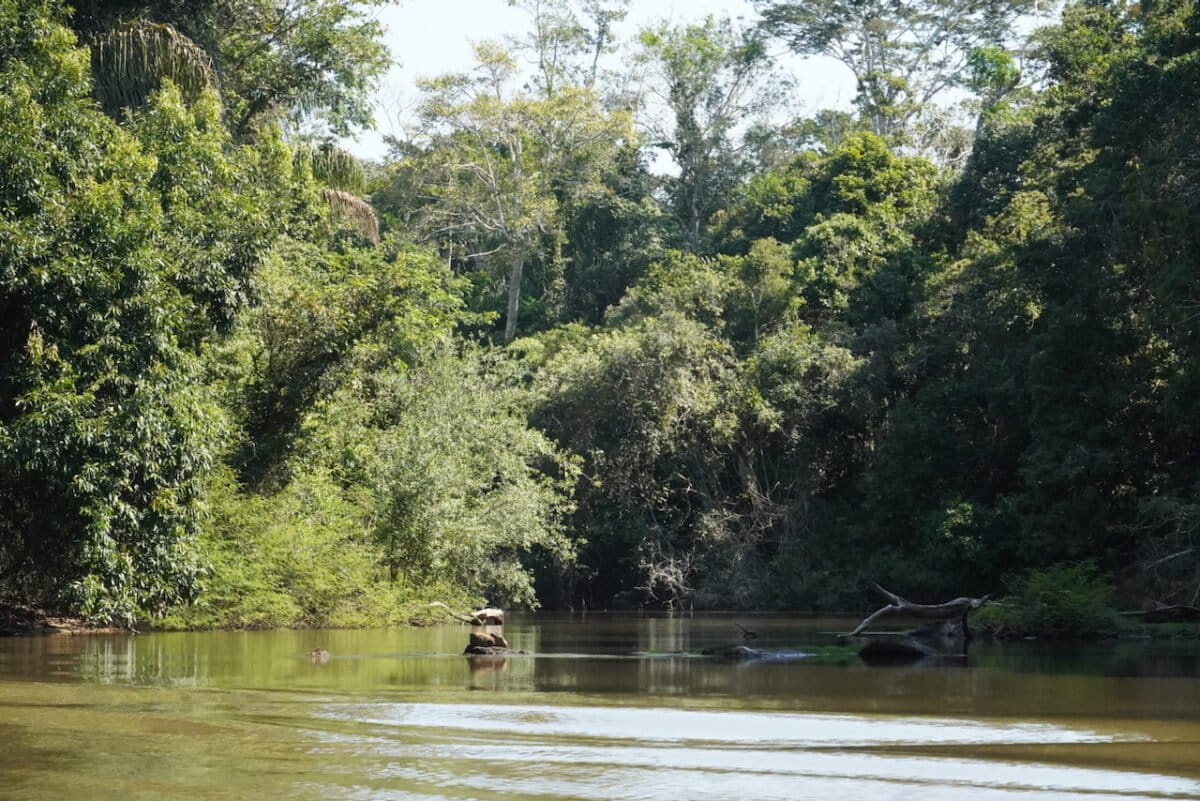
Tacana II Madre de Dios River is a Community Land of Origin (TCO) of the Tacana Indigenous people, located in the north of La Paz, Bolivia. Image: Indyra Lafuente/Conservación Amazónica ACEAA (via Mongabay).
The need for financial and other material resources, travel, and legal and technical support made the long legal battle a serious challenge for the Tacana II people, and the process was reversed or dismissed several times over the years.
Mongabay reports that the decision on July 10 by the National Institute for Agrarian Reform means the Tacana II people now have legal rights to the land and are now able to develop sustainable development projects and manage as they see fit the local natural resources, such as Brazil nuts, palms and hardwoods.
The Tacana II communities can now benefit from legal security as well as access to state support programs and direct external financing to manage their own development projects.
However, they and their supporters still have much work to do.
Daniel Aristizabal, technical secretary of the International Working Group for the Protection of Indigenous Peoples in Isolation and Initial Contact, told Mongabay that while the Tacana II land title will somewhat strengthen the protection of Indigenous Peoples in Isolation and Initial Contact who live or travel in the region, it is not sufficient.
The next step is for the Bolivian state, now under a new conservative government, to implement specific territorial protection measures for the isolated peoples.
Mr Aristizabal said these measures must involve identification studies that respect the "no contact" principle, along with official recognition and titling of Indigenous Peoples in Isolation and Initial Contact lands, or road construction, encroachment by monoculture cash crops and the presence of oil and mining companies will continue to threaten their physical and cultural survival.