




Tuvalu has demanded international polluters enter legally binding obligations that could protect the tiny Pacific nation's future existence.
Climate change is the biggest security threat, according to Tuvalu Prime Minister Feleti Teo, to the quality of its life, its food and water security, and challenges Tuvalu's "future statehood and sovereignty".
Mr Teo highlighted to the United Nations' General Assembly recently its unilateral actions that included amending the constitution "to ensure Tuvalu's statehood in perpetuity, and its maritime boundaries are protected and remain permanent".
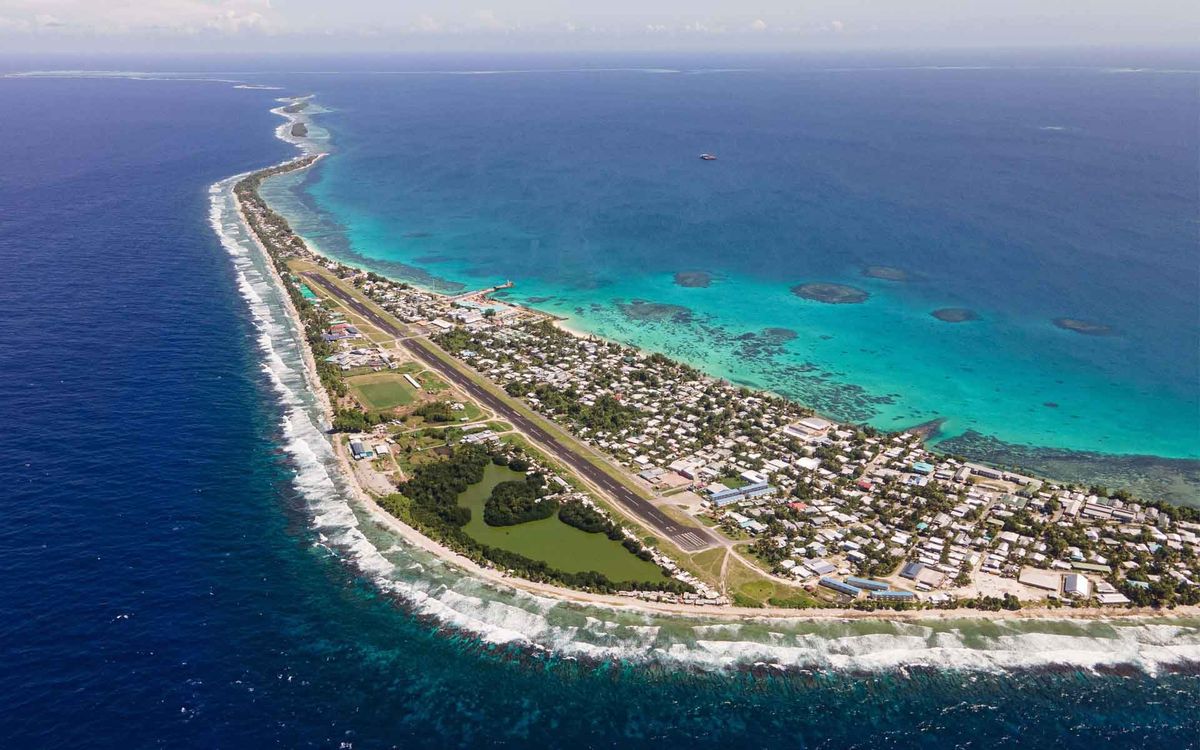
Tuvalu was one of several Pacific island nations including the Marshall Islands that had the open floor inside the UN's New York headquarters, stressing that rising sea levels posed a risk that impacts the very survival of its 25.14-kilometre land surface of Tuvalu; composed of three reef islands and six atolls, home to just over 10,000 residents.
In addition to the Falepili Union Treaty with Australia legally committing the regional power to recognise Tuvalu's sovereignty in perpetuity, Tuvalu strongly advocates for the inclusion of a UN Declaration on Sea Level Rise.
Australia had earlier this year opened up a visa lottery applications to Tuvalu nationals amid predictions from climate change scientists that the Pacific nation will be submerged in the 21st century.
The key matters Tuvalu is advocating for in the Sea Level Rise declaration includes to "affirm statehood continuity and the permanency of maritime boundaries amidst the climate crisis" and to "promote secure, organised and dignified pathways for human mobility" in the region.
Mr Teo had welcomed recent advisory opinions from the International Court of Justice and the International Tribunal for the Law of the Sea during his address, noting it "shift the conversation from political commitments to legally binding obligations".
Speaking on a theme of 'Better Together: 80 Years and More for Peace, Development and Human Rights', Mr Teo affirmed that "genuine and durable partnership is not a choice, but a necessity".
"No challenge is insurmountable when we face it together in solidarity and unity of purpose," he said.
Mr Teo has also called for the "rapid operationalisation and replenishment of the Loss and Damage Fund".
The Conference of the Parties (COP) – a supreme governing body of an international convention whose treaty's written agreement is a part of UN international law – established new funding arrangements to assist developing countries that are vulnerable to the adverse effects of climate change with a loss and damage fund to include cover for extreme weather events.
Mr Teo called upon UN member states to move forward in unity against climate change.
"While progress may have not come as swift as we desire, it is far more meaningful when it is achieved collectively," he said.
Mr Teo's also addressed the challenge of non-communicable diseases as Tuvalu's leading cause of morbidity and mortality.
He finished by expressing a level of regret at the influence of the People's Republic of China for a "continued exclusion of the Republic of China (Taiwan) from the United Nations system". Tuvalu is one of only 11 sovereign countries in the world that recognise Taiwanese sovereignty.