



Adobe is facing criticism from Indigenous artists and human rights advocates for hosting AI-generated images and artworks falsely depicting "Indigenous Australians" on its stock image platform.
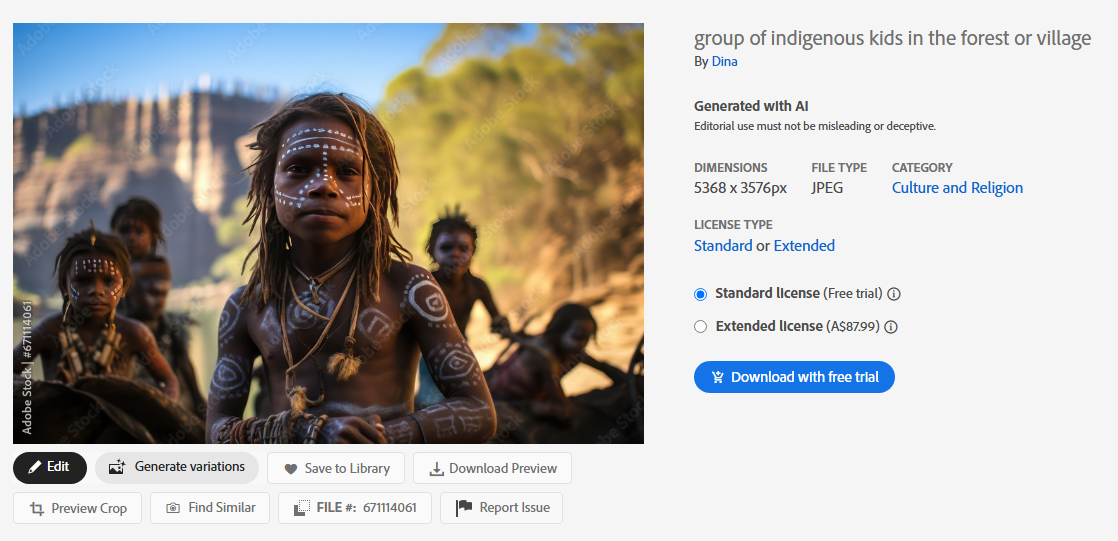
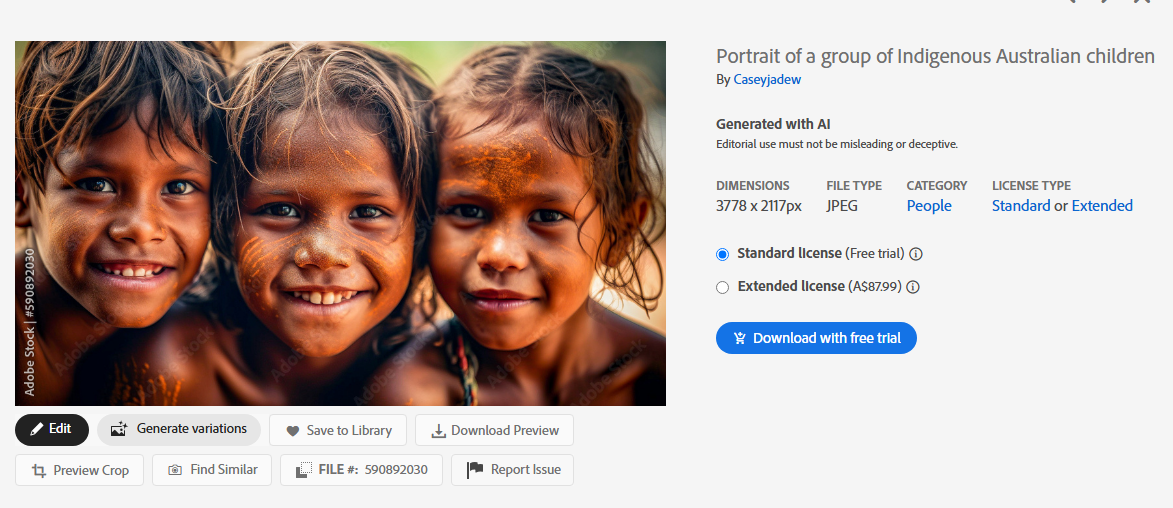
A review of Adobe Stock found numerous AI-generated images labelled as Indigenous Australians, many of which do not resemble Aboriginal and Torres Strait Islander people.
These images also feature random markings that have no cultural or clan significance, raising concerns about authenticity and consultation.
Traditional body markings in Indigenous cultures are specific to tribal groups, yet the AI-generated images appear to apply them in a generic and inaccurate manner.
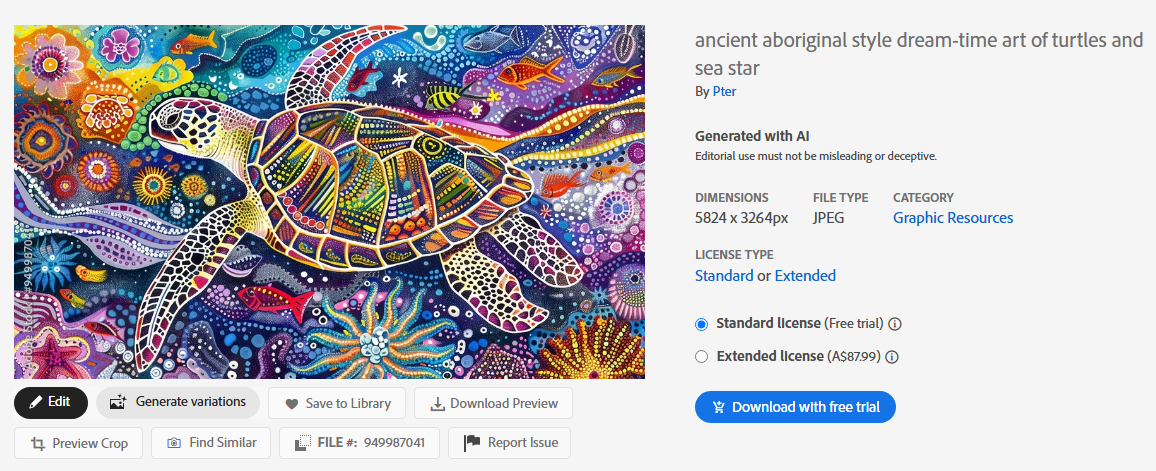
AI-generated Aboriginal artwork has also been discovered on the platform, leading to fears that real traditional designs may have been used to train AI models without permission.
Indigenous artists community members have questioned whether Adobe sought consent from traditional custodians before producing these works and whether the AI-generated content is replacing or devaluing real Indigenous artists.
Wanyi and Kalkadoon artist Kylie Hill condemned the presence of AI-generated Indigenous content on Adobe Stock, calling it an attack on real artists.
"I think it's criminal. It's taking money away from real artists," Ms Hill said.
"People should be paying the real artists, not Adobe fakes.
"Our artwork is about our lives and our family, and they're taking that to make a quick buck off it."
Additional concerns were raised regarding Adobe Stock's use of the outdated and offensive term "Aborigine" in its image descriptions, a term with a harmful colonial history.
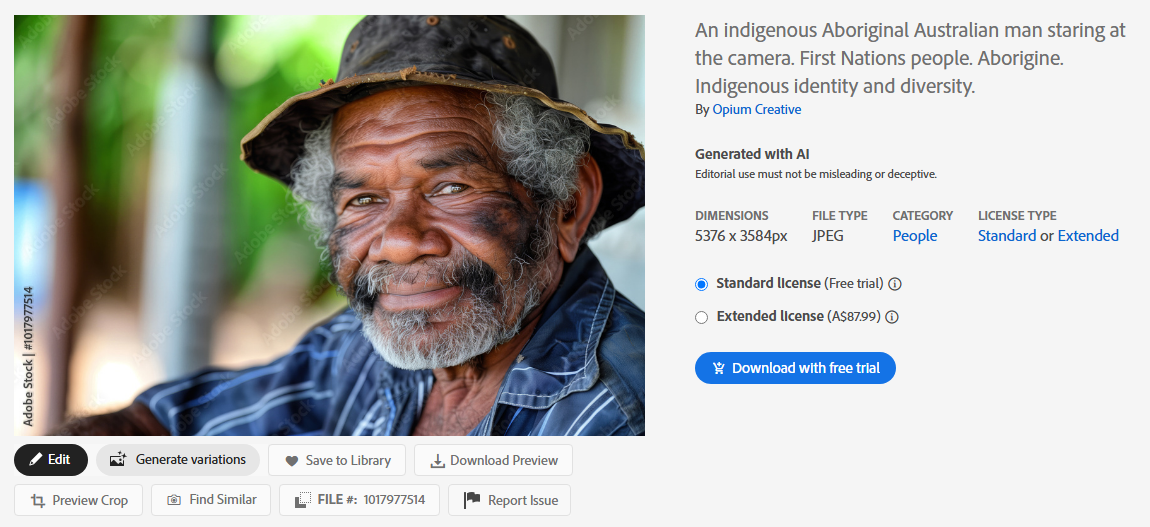
Adobe was also questioned about its accountability measures, consultation processes, and whether the inclusion of AI-generated Indigenous images was an attempt to avoid paying real artists and models.
Adobe failed to address many of the concerns raised by the National Indigenous Times about AI-generated Indigenous images, training data, or ethical considerations.
Instead, the company provided a statement referencing its Reconciliation Action Plan, saying it is "on a journey of reconciliation" and "exploring how we can evolve and update our RAP".
Adobe also pointed to its Illustrative Editorial category, which allows for AI-generated conceptual imagery intended for editorial use.
"We are continually auditing, evaluating, and improving the Adobe Stock collections to serve our customers' needs," they said.
"Adobe Stock is a digital media marketplace offering high-quality images, videos, and other content for licensing.
"Our collection is curated to be versatile, catering to a wide range of creative and commercial needs.
"Unless explicitly marked as editorial only, the content displayed on Adobe Stock reflects the creative vision of its contributors and should not be interpreted as factual."
Dr Hannah McGlade, a Kurin Minang Noongar woman and Senior Indigenous Fellow at the United Nations Office of the High Commissioner for Human Rights, also criticised Adobe's actions, warning that the company is disregarding human rights principles.
"It's shocking that a major company like Adobe would be engaging in such disrespectful conduct towards Indigenous people who have suffered histories of colonisation and violence," she said.
"Using AI-generated images as stock images is entirely inappropriate.
"UN Guiding Principles on Business and Human Rights need to be respected by all non-state entities, including Adobe."
At time of publication the word "Aborigine" was still in Adobe's stock image descriptions.
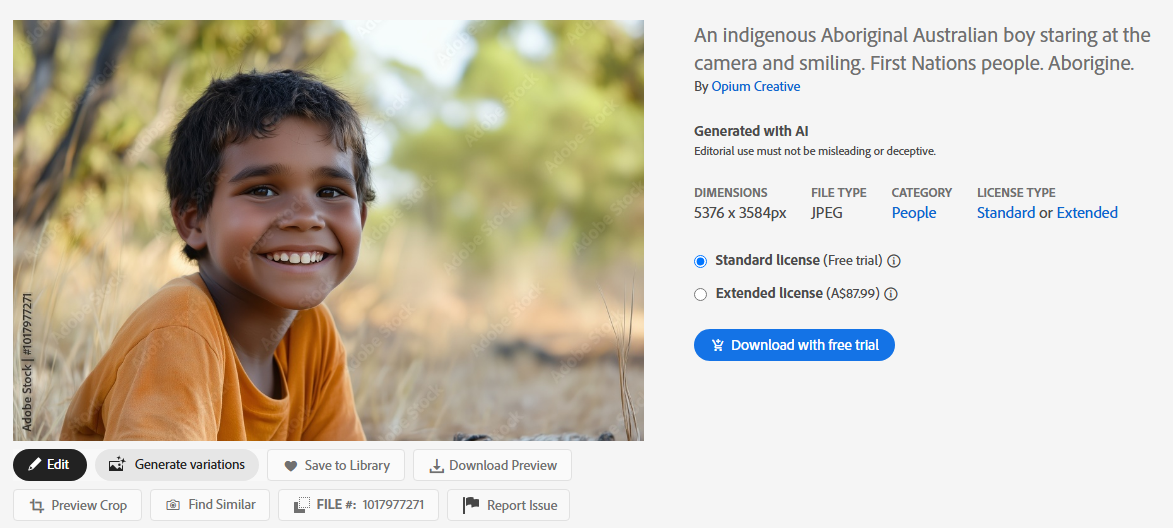
"This is an outdated term that has a negative connotation," Dr McGlade said.
The backlash against Adobe highlights broader concerns about AI, cultural appropriation, and Indigenous representation in digital spaces.
Indigenous advocates are calling for greater transparency, accountability, and an immediate halt to the use of AI-generated Indigenous images and artwork without consultation or consent.
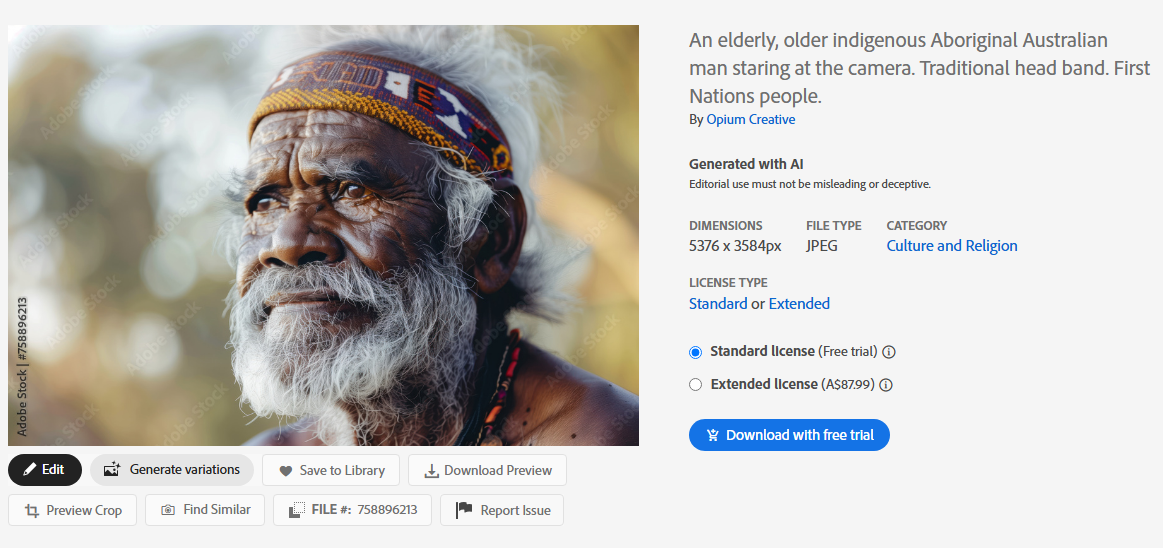
For now, Adobe has not explained how its AI models are trained or what safeguards are in place to prevent cultural exploitation.
If the company fails to act, Indigenous leaders say a boycott may be the next step.
"Adobe needs to urgently stop and address this problem – if they don't, I think people should protest and boycott," Dr McGlade said.
Adobe's Indigenous ambassador has been contacted for further comment.