





A growing list of more than 100 First Nations leaders and organisations from across the Canadian province of British Columbia have renewed their vow to defend the Declaration on the Rights of Indigenous Peoples Act.
On Monday the alliance announced the milestone, calling on BC Premier David Eby to uphold the Declaration Act as originally co-developed with First Nations and passed unanimously by all parties in the Legislature in 2019.
When the Declaration Act was introduced as Bill-41 in 2019, the Province stated in the Legislature that "BC is the first province to put in place the declaration on the rights of Indigenous peoples, to bring the UN declaration (UNDRIP) into law" - which First Nations leaders note was "the shared, original intent" of the Act.
On January 29, the Province issued a letter of notification to First Nations in British Columbia regarding potential amendments to the Declaration Act and Interpretation Act anticipated for the spring legislative session and invited First Nations to participate in an expedited consultation and cooperation process - subject to signing a Non-Disclosure Agreement (NDA).
Subsequently, those First Nations leaders who signed an NDA received materials regarding potential amendments from the Province.
First Nations are speaking out against the Province's proposal to amend the Declaration Act and Interpretation Act, stating: "The Province's actions risk pulling all who call BC home back to a time of blame, conflict, increased litigation, and threats of violence against Indigenous peoples."
The full joint statement, first published December 22, has a growing list of signatories - now over 100. It is published below. The signatories can be seen online.
Joint Statement: B.C.'s Declaration Act Provides a Backstop of Certainty in a World of Chaos
Calls to amend the Declaration Act or appeal recent court decisions would undermine economic certainty, reconciliation, and shared prosperity in British Columbia.
At a time of global instability and uncertainty, people are understandably looking for clarity, certainty, and leadership grounded in shared values. Difficult moments can bring out the best in us—or they can provoke fear-based reactions that risk undoing hard-won progress. Recent trends in British Columbia are cause for concern.
Despite recent court decisions that reaffirm the crucial need to consult and negotiate, a negative narrative has begun to take hold. This narrative wrongly blames First Nations for uncertainty while ignoring the historical reality that British Columbia was largely settled without treaties. It replaces facts and experience with fear, and cooperation with division.
If allowed to shape public discourse or government decision-making, this narrative risks pulling our province backward—toward a time marked by blame, conflict, increased litigation, and even real threats of violence against Indigenous peoples. That is not a future any of us should accept.
Recent calls to amend the Declaration Act or appeal court rulings are rooted in this fear-based response. They suggest that the framework we have built together is the problem, when in fact it has been part of the solution. These actions would not create certainty—they would slow progress, increase litigation, and grind projects to a halt as First Nations are once again forced to defend our rights and interests through the courts.
British Columbia is facing real economic challenges, and First Nations are essential partners in addressing them. Our Nations are drivers of the provincial economy, supporting local communities and helping to close economic gaps through responsible projects and developments in our territories. These projects depend on the certainty provided by the Declaration Act, which offers a clear, principled pathway for First Nations, governments, and industry to work together—advancing reconciliation while enabling timely and sustainable development.
The Declaration Act was developed collaboratively with Indigenous peoples and passed unanimously by all parties in the Legislature, with the support of industry, business, and labour. It establishes minimum standards of survival and dignity for Indigenous peoples and has contributed to greater trust, stability, and economic certainty across the province. It is landmark legislation—and one British Columbia should be proud of.
British Columbia faces a clear choice about the path we walk together: a path of negotiation, collaboration, and shared prosperity with First Nations and all British Columbians, or a path that takes us backward to a place of uncertainty and conflict that none of us want to revisit.
The Declaration Act—and decisions like Gitxaala v. British Columbia (Chief Gold Commissioner)—are not obstacles. They are opportunities. They provide a framework to do the necessary work of reconciliation in a way that builds clarity, stability, and shared success.
We call on leaders and British Columbians alike to pause, reflect, and recognize the steady progress that has been made under the Declaration Act—and the healthier, more respectful relationships that have emerged because of it.
We call on Premier Eby to uphold the Declaration Act, resist calls to amend it or pursue appeals, and to sit down with Indigenous leadership to continue the work of building certainty, trust, and economic prosperity for everyone in British Columbia.
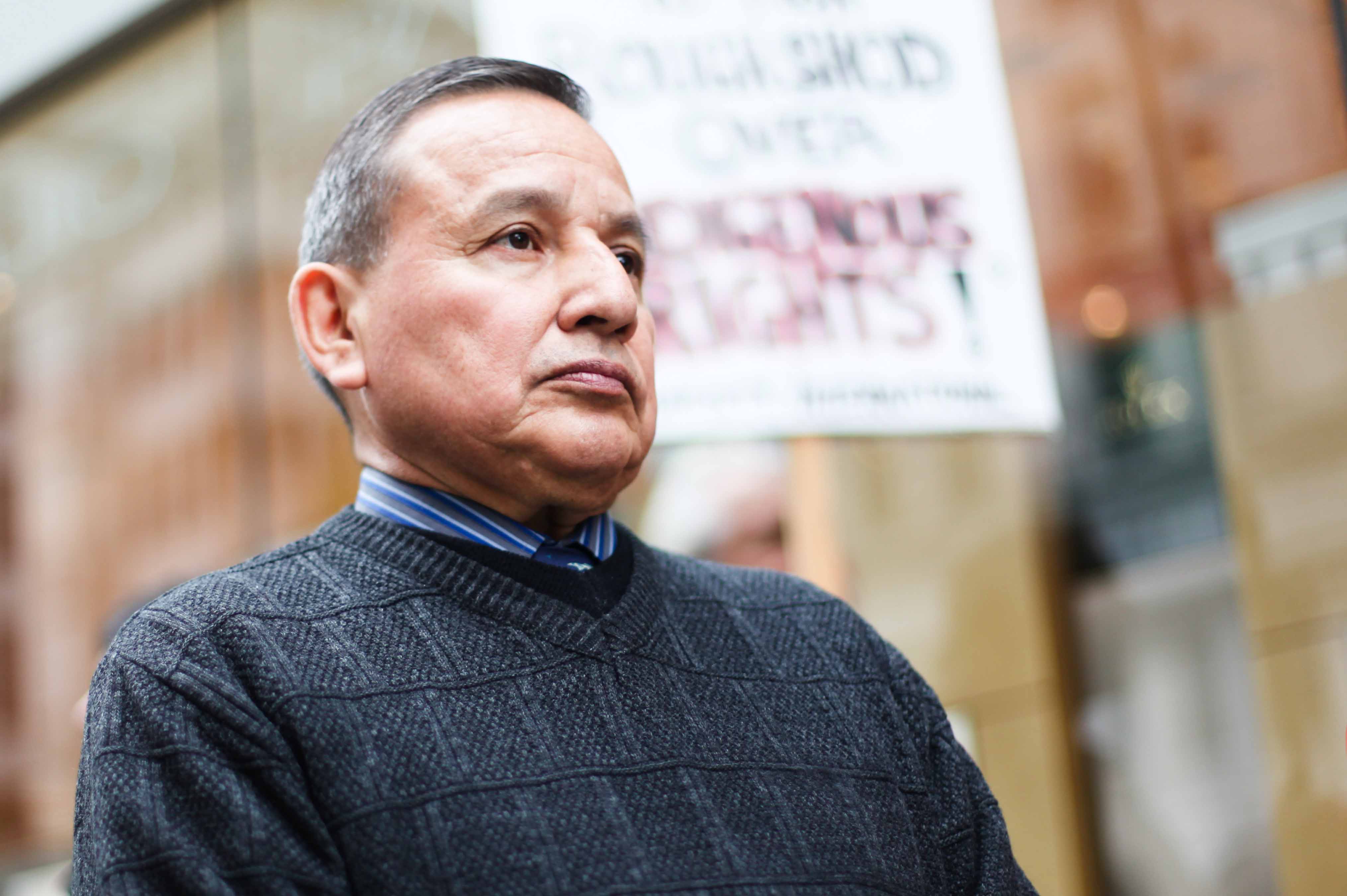
The Union of British Columbia Indian Chiefs is among the organisations opposed to the proposed Declaration Act changes. Pictured - UBCIC president, Grand Chief Stewart Phillip, of the Syilx Nation. Image: David P. Ball.