





Ancestral Māori carving 'Te Pou o Hinematioro' is set to be repatriated to Aotearoa after more than 250 years in European hands.
The University of Tübingen announced the return of the pou (carved wood artefact) to the Māori community of Te Aitanga-a-Hauiti, following formal discussions and a repatriation request from the New Zealand government in 2024.
The pou was taken on Captain James Cook's first voyage to New Zealand in 1769 and arrived in London in 1771 before being moved through private hands and ending up in the university's ethnological collection.
Victor Walker, a representative of Te Aitanga-a-Hauiti, said the carving has deep spiritual significance for the community.
"The Pou represents our paramount leader Hinematioro and her ancestral line back to the birth of our community," Mr Walker said.
"The Pou transmits the life force, or mauri. When we touch it or are close to it, we can sense the breath and the presence of our ancestors and feel alive."
In Māori tradition, a pou is housed within a wharenui (house) and acts as a spiritual conduit to ancestors.
The Pou of Hinematioro was carved from Canarywood using stone tools and is adorned with fluted patterns across the face, tongue and body.
Since its rediscovery in the 1990s by University of Tübingen curator Dr Volker Harms, the pou has been the focus of ongoing cultural reconnection.
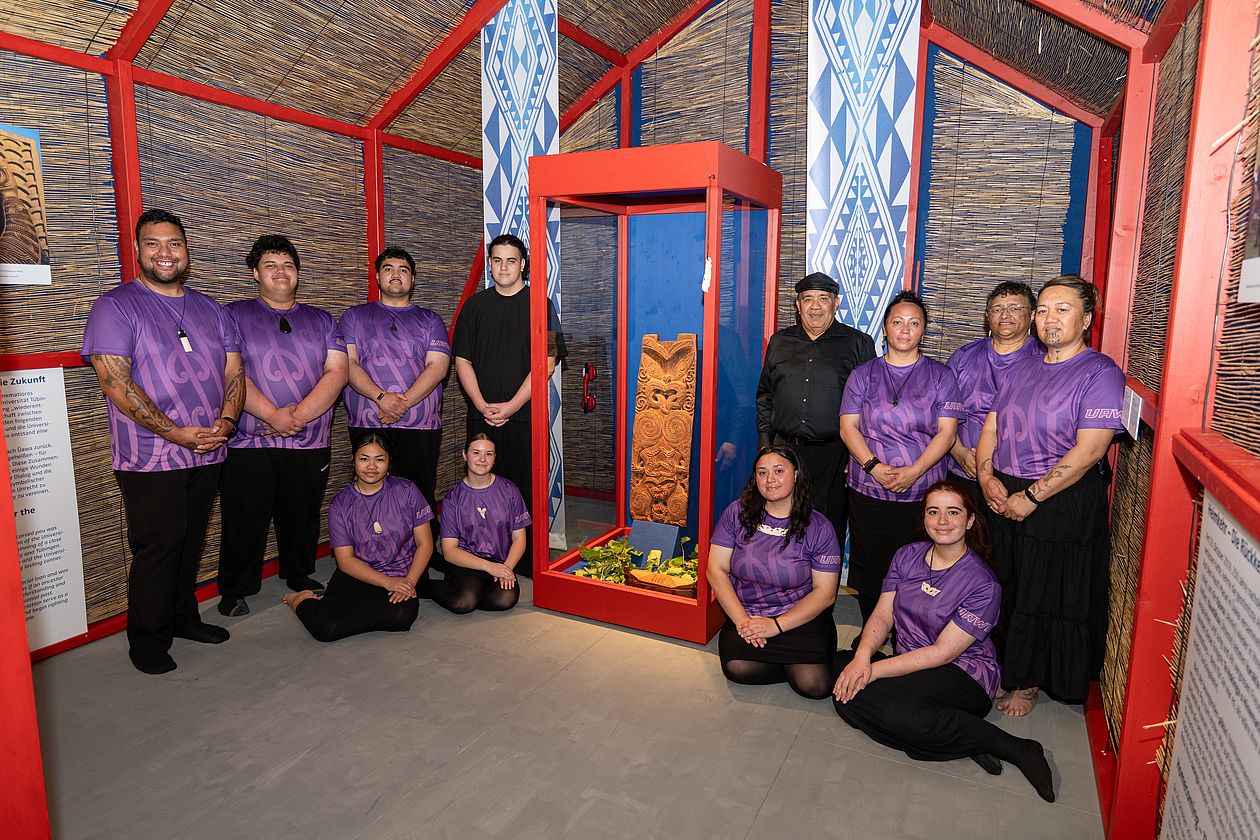
In 2008, a Te Aitanga-a-Hauiti delegation paid their respects in person, and in 2019, the carving was returned on temporary loan to its home community in Ūawa (Tolaga Bay).
The circumstances of its original removal remain unknown.
After arriving at Ūawa following conflict further south, Cook was welcomed by Hinematioro and her people.
How the pou came aboard the Endeavour has not been recorded.
German officials acknowledged the need for responsibility in addressing the colonial past.
"There are still numerous cultural belongings from colonial contexts to be found in our museums as well as in our university collections which were appropriated in ways no longer ethically justifiable," Ms Olschowski said.
"I am glad that the committees of the University are aware of their historical responsibility and decided to return the sculpture."
The University of Tübingen and Te Aitanga-a-Hauiti have developed an ongoing partnership, with visits continuing as recently as October 2025. The community performed a haka at the Hohentübingen Castle exhibition, where the pou is currently on display.
University president Professor Karla Pollmann said the return strengthens this relationship.
"The Pou and its history has led to a long-standing relationship between the Māori community of Te Aitanga-a-Hauiti and the University of Tübingen," she said.
"We want to cultivate this relationship and make a positive contribution to the return of museum pieces to countries with a colonial past."
The current exhibition Te Pou o Hinematioro. Celebrating Māori Heritage, Culture and Connection continues at the Museum of Ancient Cultures in Hohentübingen Castle until 29 March.
The pou is expected to return home to Ūawa shortly after.