




Indiana University has completed its first international repatriation of human remains to the Rapa Nui people of Easter Island.
The remains were originally donated to Indiana University (IU) in the 1990s by David M. Lodge, a descendant of U.S. Navy Rear Admiral George Henry Cooke.
Mr Cooke served as a surgeon during Ulysses S. Grant's world tour in the late 1870s and later visited Easter Island in 1886 aboard the USS Mohican, collecting moai sculptures for the Smithsonian.
The ancestor repatriated by IU is believed to be linked to Pakomio Mā'ori, a survivor of the 1862 Peruvian slave raids.
His great-great-grandson, Catholic priest and Franciscan friar Francisco Nahoe, worked with IU on the return.
Mr Nahoe said the island's legacy of material culture is widely recognised, with moai statues built by a small and isolated Polynesian population.
"The whole island is an outdoor museum of monumental statuary constructed on a scale unmatched anywhere," Mr Nahoe said.
Mr Nahoe is the North American delegate of Te Mau Hatu, the Rapa Nui council of elders, for recovery and repatriation.
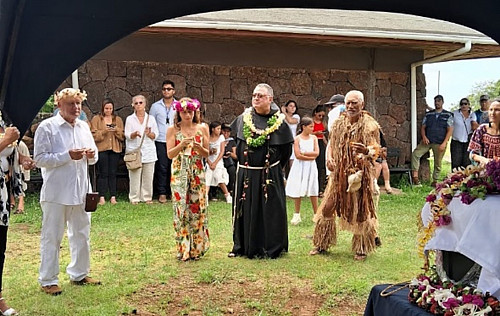
He attended IU's INSTEP program in 2024 with his cousin, archaeologist Susana Nahoe.
Mr Nahoe said the crania of these sculptors were taken by Euro-American collectors.
"We, their modern descendants, believe it is our duty to find and recover their remains," he said.
"Moreover, the United Nations and the Organisation of American States have emphatically asserted the right of Indigenous peoples to repatriate their ancestral remains."
Mr Nahoe said the program reflects a growing global interest in repatriation.
"There's no question that 35 years of compliance with this act have generated an ethos of repatriation in the United States," he said.
"IU, however, is now leading the way by working on these issues with Indigenous communities beyond NAGPRA.
"Museums and universities have understood that it is not merely obligatory to return ancestral remains, it is also right and just."
The training, directed by IU's Jayne-Leigh Thomas, provides guidance on returning ancestral remains under the Native American Graves Protection and Repatriation Act.
She visited Rapa Nui in December as a guest of Rapa Nui representatives and is now working on joint research projects.
"To know that I played a small part in returning these Rapa Nui ancestors to Easter Island is overwhelming and so personally rewarding," she said.
Ms Thomas said the visit helped strengthen relationships and provided the opportunity to visit archaeological sites and experience the island's heritage.
While in Rapa Nui, Ms Thomas met with officials and community members to explore future collaborations, including training programs, repatriation education and an artist-in-residence exchange.
She and Mr Nahoe are also working on a book to support international repatriation efforts.
Ms Thomas hopes to expand IU's role through a proposed repatriation certificate within its master's programs, as well as by pursuing larger projects in partnership with IU law faculty and its Global Gateways.